Transport & Mobility
Transportation forms the backbone of every memorable journey, yet it remains one of the most underestimated aspects of travel planning. Whether navigating remote gravel roads, coordinating ferry schedules, or understanding the pricing dynamics of regional aviation, the choices you make about how you move directly impact both your safety and your budget. The complexity multiplies when considering accessibility needs, long-distance isolation, or the logistics of transporting vehicles across waterways.
Modern travel demands more than simply booking a ticket or renting a car. It requires understanding terrain-specific driving techniques, anticipating the unique challenges of car-free destinations, recognizing when specialty transport like luxury trains justifies their premium cost, and preparing for self-sufficiency in areas where help may be hours away. This comprehensive resource connects the essential elements of transport and mobility, providing the foundational knowledge to make informed decisions across diverse travel scenarios.
Navigating Remote and Self-Sufficient Travel
Remote destinations offer unparalleled natural beauty and solitude, but they demand a fundamentally different approach to transportation. The margin for error narrows considerably when the nearest service station sits 200 kilometers away and mobile coverage becomes non-existent. Self-sufficiency transforms from a preference into a necessity.
Preparing Your Vehicle for Challenging Terrain
Gravel roads present specific hazards that paved surfaces never introduce. Loose stones can puncture fuel tanks, corrugations shake vehicles apart over time, and sudden washouts appear without warning. Mastering the appropriate speed—typically slower than instinct suggests—and understanding weight distribution prevents the fishtailing that catches inexperienced drivers off-guard. Tire pressure adjustments make a measurable difference in both traction and comfort on extended gravel sections.
Fuel consumption increases dramatically on unpaved roads, sometimes by 30-40% compared to highway driving. Calculating range conservatively means accounting for detours, headwinds, and the reality that advertised fuel stops occasionally run dry in isolated regions. Carrying reserve fuel isn’t paranoia; it’s standard practice among experienced remote travelers.
Communication and Emergency Preparedness
A mechanical survival kit bridges the gap between a minor inconvenience and a dangerous situation. Beyond spare tires and jacks, consider items specific to your route: radiator hoses for desert crossings, fuses, duct tape, and basic tools that address the most common failure points of your specific vehicle model. Insurance policies deserve scrutiny too—many standard rental agreements contain exclusions for unsealed road damage that can leave you financially exposed.
Communication devices serve as your lifeline when distances isolate you from conventional help. Satellite messengers and emergency beacons function where phones cannot, though understanding their operational limitations prevents false confidence. These devices require clear sky visibility and often experience delays in dense vegetation or canyon terrain.
Mastering Island and Ferry Transportation
Islands without vehicle access present a logistical puzzle that rewards careful planning. The absence of cars doesn’t simplify travel—it redirects complexity into understanding local transport networks, coordinating luggage management, and timing movements around fixed schedules that rarely accommodate spontaneity.
Planning Around Ferry Schedules
Ferry timetables govern the rhythm of island destinations. Unlike buses or trains with frequent departures, many island routes operate once or twice daily, with weather conditions occasionally canceling services entirely. Missing a connection can mean an unplanned overnight stay, making advance booking of accommodation a practical necessity rather than mere convenience. Peak seasons see ferries reach capacity quickly, and foot passengers sometimes receive priority over vehicles during busy periods.
Luggage logistics demand attention when multiple transfers separate you from your accommodation. Wheeled bags that glide effortlessly through airports become cumbersome on dock gangways, sandy paths, or stairs. Some island services offer luggage transfer options that allow travelers to explore unburdened while bags move independently to hotels.
Vehicle Transport Logistics Across Waterways
Transporting vehicles across significant water passages, such as major straits, introduces considerations beyond simple ticketing. Quarantine biosecurity checks protect island ecosystems from invasive species, requiring vehicle cleaning that focuses on wheel wells, undercarriages, and cargo areas. The process seems tedious until you understand the ecological devastation that hitchhiking pests and seeds can unleash.
Travelers with caravans or pets face additional layers of complexity. Not all ferry services accommodate larger recreational vehicles, and those that do often require specific tie-down procedures and dimensional restrictions. Pet policies vary widely—some services provide designated areas, others mandate vehicles remain below deck, and certain routes prohibit animals entirely outside approved carriers. Day versus night sailings present trade-offs between time efficiency and the reduced sea sickness many experience when sleeping through crossings.
Understanding Air Travel Economics and Optimization
Aviation in certain regions operates under market conditions that defy conventional booking wisdom. When two carriers dominate an entire continent’s domestic routes, the competitive pressures that typically drive prices down diminish substantially. Understanding these dynamics separates travelers who pay premium fares from those who maximize value.
The duopoly structure creates pricing patterns worth studying. Last-minute deals rarely materialize on routes with limited competition, making early booking more critical than in markets with numerous carriers. Remote destinations see particularly pronounced price variations based on demand cycles, with shoulder seasons offering the most significant savings potential. Frequent flyer programs become especially valuable in concentrated markets—loyalty accrues faster when alternatives barely exist.
Yet air travel shouldn’t be evaluated in isolation. Long-distance bus alternatives, while significantly slower, sometimes cost one-quarter the price of equivalent flights. The time-money calculation depends entirely on individual circumstances: a traveler on a tight budget with flexible schedule may find the overnight bus perfectly sensible, while someone with limited vacation days rationally prioritizes speed. Luggage weight limits deserve attention during booking—fees for excess baggage can transform an apparently economical ticket into an expensive mistake.
Ensuring Safety on Long-Distance Road Journeys
The open road romanticizes easily until the realities of isolation, fatigue, and environmental extremes assert themselves. Long-distance driving through sparsely populated regions demands respect for hazards that urban motorists never encounter. Preparation and awareness form your primary defense mechanisms.
Managing Fatigue and Environmental Hazards
Driver fatigue kills with terrifying efficiency, yet it creeps up gradually enough that many fail to recognize their own impairment. Strategic rest stop planning isn’t optional on journeys spanning hundreds of kilometers between towns. The pattern matters more than the duration—brief stops every two hours prove more effective than occasional long breaks. When drowsiness appears despite rest stops, the only safe response is sleeping, not increasing coffee intake.
Mental engagement helps combat the hypnotic monotony of straight, empty highways. Audiobooks, podcasts, or music rotation keeps the brain actively processing information rather than defaulting to dangerous autopilot mode. Sun glare presents another underestimated hazard, particularly during dawn and dusk when the low angle aligns directly with travel direction. Quality polarized sunglasses reduce eye strain significantly, while some experienced travelers plan routes to minimize direct sun exposure during these vulnerable periods.
Daily vehicle fluid checks seem excessive until you’ve experienced a radiator failure in extreme heat with no assistance available for hours. Oil, coolant, and brake fluid levels take minutes to verify but hours to correct when neglected.
Sharing Roads with Heavy Vehicles
Road trains—truck configurations pulling multiple trailers that extend 50+ meters—operate in regions where traffic density permits their extraordinary length. Overtaking requires clear visibility for distances that seem excessive to those unfamiliar with their acceleration characteristics. Attempting to pass on insufficient straight sections forces dangerous choices when oncoming traffic appears.
The wake turbulence from passing or being passed by these giants can push lighter vehicles sideways, particularly in crosswinds. Maintaining firm steering grip and anticipating the buffeting prevents overcorrection. Experienced drivers provide road trains generous space, both because safe practice demands it and because these professional drivers often share valuable local knowledge about road conditions ahead through CB radio networks.
Planning Accessible Travel Experiences
Accessible travel requires interrogating assumptions that able-bodied travelers never question. Transport systems, accommodation standards, and activity availability vary dramatically in their genuine accessibility, often despite official ratings that prove optimistic upon arrival. Advance verification separates successful journeys from frustrating disappointments.
Transportation Accessibility Standards
Airline policies regarding mobility aids, medical equipment, and assistance services differ substantially between carriers. Checking specific policies during booking rather than at check-in prevents last-minute complications. Battery-powered wheelchairs face particular scrutiny regarding battery type and capacity, with lithium batteries requiring advance notification on most carriers.
Vehicle rental for travelers with accessibility needs demands direct communication with providers. Standard online booking systems rarely capture the specific modifications required, and vehicle availability varies significantly by location. Major cities typically maintain fleet diversity, while regional centers may require advance notice measured in days or weeks to source appropriate vehicles. Public transport gaps create genuine barriers in destinations where accessible vehicles exist but connecting infrastructure fails—accessible buses mean little when stops lack proper curb cuts or shelters.
Accommodation and Activity Standards
Hotel bathroom standards represent a common disconnect between advertised accessibility and practical reality. “Accessible” rooms sometimes feature grab bars but lack roll-in showers, or provide wide doorways while maintaining high bed frames that transfer difficulty. Requesting specific photographs or detailed measurements before booking prevents arrival-day surprises that cannot be easily rectified.
Nature trail accessibility opens outdoor experiences to broader audiences, yet “accessible” trail designations vary wildly in meaning. Some indicate fully paved paths suitable for standard wheelchairs, others suggest merely gentler grades that still present barriers. Trail surface composition, gradient percentages, rest area frequency, and turnaround space all matter tremendously. Contacting local visitor centers or disability advocacy organizations yields more reliable information than general marketing materials.
Evaluating Specialty Transportation Experiences
Luxury train journeys occupy a unique niche where transportation becomes destination. The premium pricing—often several times the cost of flying the same distance—purchases an experience fundamentally different from merely getting between points. Evaluating value requires clarity about your priorities.
Cabin amenities range from compact sleepers with basic facilities to suites approaching hotel room dimensions. Space constraints affect comfort significantly on multi-day journeys, making packing strategy crucial. Off-train excursions vary from brief photo stops to substantial guided tours, with quality differing markedly between operators. The dining experience justifies significant weight in the overall assessment—some services offer genuinely exceptional cuisine, while others deliver adequate meals that disappoint given overall costs.
Seasonal timing affects both pricing and experience quality. Shoulder seasons may offer reduced fares alongside more moderate weather, while peak periods command premium rates but guarantee optimal visibility of scenic highlights. The calculation ultimately rests on whether the journey itself holds value beyond efficient point-to-point transport.
Transportation choices shape every journey’s character, budget, and safety profile. The complexity spans vehicle preparation for remote terrain, ferry coordination, aviation economics, fatigue management, accessibility verification, and specialty experience evaluation. Each element demands attention proportional to its relevance to your specific circumstances. The travelers who thrive across diverse transportation challenges share a common trait: they invest time understanding the specific demands of their chosen routes before departure, transforming potential obstacles into manageable logistics.
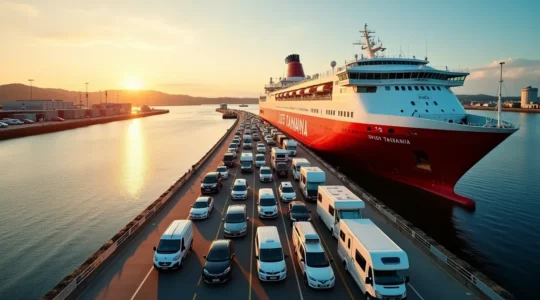
Spirit of Tasmania: Your Tactical Guide to Securing a Vehicle Spot in Summer
In summary: Peak season booking for the Spirit of Tasmania is a logistical mission that requires anticipating operational bottlenecks. Strategic choices about your cabin’s location, understanding biosecurity procedures, and preparing for pet travel are as critical as booking early. Vehicle…
Read more
The Ghan Expedition: Is Gold Class Worth the Extra $1000?
The $1000+ upgrade to Gold Class on The Ghan is less about overt luxury and more about strategically eliminating the inherent frictions of long-distance rail travel. Private ensuites and generous luggage allowances resolve the two biggest practical hassles of the…
Read more
Avoiding Driver Fatigue on the Nullarbor: The 2-Hour Rule
Successfully crossing the Nullarbor is less about driving skill and more about disciplined psychological management of monotony and fatigue. The “2-Hour Rule” is a non-negotiable cognitive reset, not just a physical break. Monotony induces a hypnotic state, severely impairing judgment…
Read more
Why Regional Flights in Australia Can Cost More Than International Ones
The shocking price of Australian regional flights isn’t a market anomaly; it’s the logical result of a low-volume, high-fixed-cost economic model. Regional routes suffer from low passenger density, meaning high operational costs are spread across fewer tickets. A lack of…
Read more
Traveling Australia with a Wheelchair: Which Cities Are Most Accessible?
Planning an accessible trip to Australia often hits a wall of vague promises and hidden obstacles. The key to a successful journey isn’t finding a single “most accessible” city, but mastering the specific systems and verification methods required to navigate…
Read more
Rottnest Island by Bike: Is the 22km Loop Too Hard for Casual Cyclists?
The 22km Rottnest Island loop isn’t a test of brute strength; it’s a test of smart planning that any occasional cyclist can pass. Your choice of bike—standard or electric—is a strategic decision about energy management, not just fitness. Time-boxed itineraries…
Read more
Renting a 4WD for the Outback: A Mechanic’s Guide to Avoiding Disaster
Thinking your standard rental agreement has you covered for the Outback is the first, and most expensive, mistake you can make. The ‘unsealed road’ clause in most rental contracts is a financial trap designed to void your insurance precisely when…
Read more