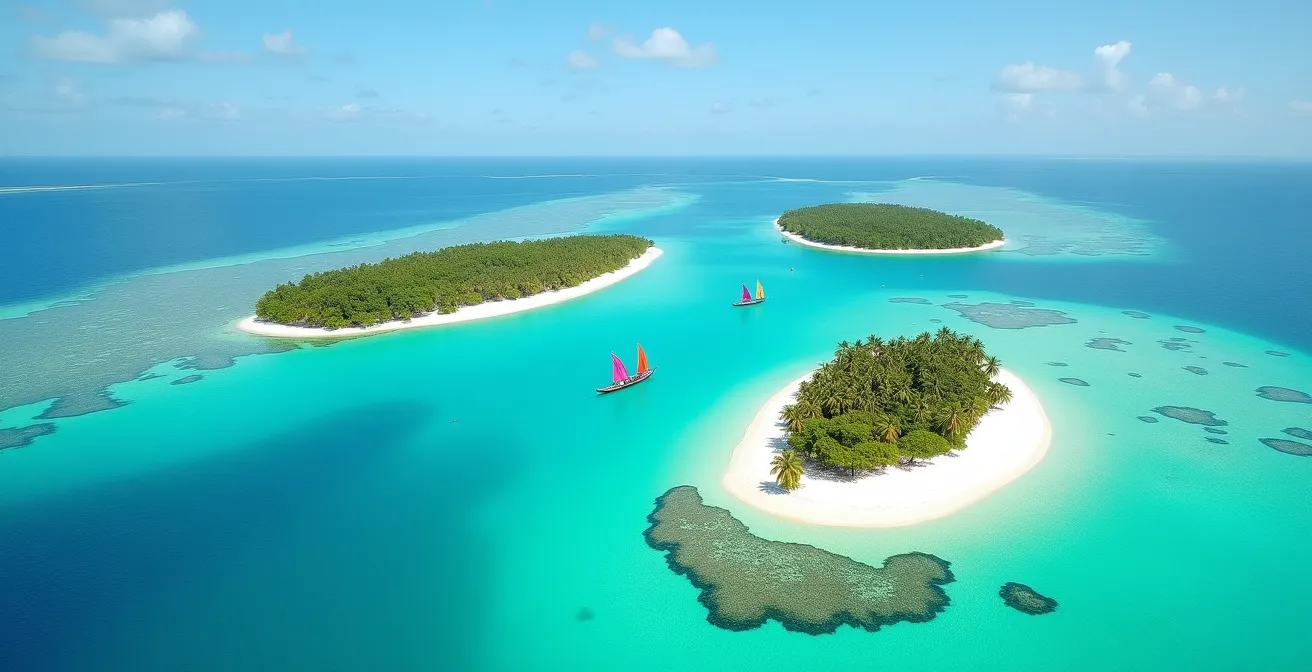
The distinction between Aboriginal and Torres Strait Islander peoples goes far beyond a simple mainland-versus-island geography; it is rooted in a unique “saltwater consciousness.”
- This maritime identity is expressed through specific cultural symbols like the Dhari headdress, which is fundamentally tied to the sea and Islander tradition.
- It shapes everything from social structure, based on sea rights, to a distinct cuisine featuring marine resources and tropical ingredients like coconut.
Recommendation: To truly grasp the difference, one must look for these tangible expressions of a sea-based culture, which are distinct from the diverse, land-based cultures of Aboriginal Australia.
For many international visitors to Australia, the term “Indigenous Australian” is often, and incorrectly, used as a monolithic label. While well-intentioned, this generalization overlooks the rich diversity of First Peoples. The most fundamental distinction is between Aboriginal peoples, the original inhabitants of mainland Australia, and Torres Strait Islander peoples. The common explanation—that one group is from the mainland and the other from the islands north of Queensland—is geographically accurate but culturally superficial. It’s like saying the only difference between a Parisian and a Corsican is their address.
This explanation misses the profound, immersive reality of what it means to be an Islander. The true difference lies not just in location, but in a deep-rooted “saltwater consciousness”—a worldview entirely shaped by the sea. This maritime identity is not an abstract concept; it is a tangible force that defines everything from spiritual beliefs and artistic symbols to social laws, daily logistics, and even the taste of the food on the table. It is a culture born of winds, tides, and marine ecosystems.
To genuinely understand the distinction, one must move beyond maps and explore these living cultural expressions. This article will delve into the specific markers of Torres Strait Islander identity, examining how a life lived on the water has created a culture that is beautifully and fundamentally distinct from that of mainland Aboriginal Australia. We will explore the symbols, taste the food, understand the laws of the sea, and listen for the unique sounds that tell the story of the Torres Strait.
Summary: Distinguishing the Rich Cultures of Australia’s First Peoples
- The Dhari headdress: understanding the symbolism of the green, blue, and black flag
- Sop Sop and Semur: where to taste authentic Torres Strait dishes on the mainland?
- Sea rights vs land rights: how maritime culture defines the Islander identity?
- Logistics of the TI ferry: how to reach the administrative center of the straits?
- The importance of the rattle: listening for the unique sound of Island music
- Why drinking water isn’t enough: the importance of electrolytes in the tropics?
- Irritability and heat: understanding the psychological effect of constant humidity
- Exploring the Daintree: Why You Need an Indigenous Guide for the Full Story?
The Dhari Headdress: Understanding the Symbolism of the Green, Blue, and Black Flag
While both Aboriginal and Torres Strait Islander peoples have their own distinct flags, the symbolism of the Islander flag is a direct manifestation of its maritime culture. At its center is a white Dhari, a traditional feathered headdress worn by dancers and warriors. Its presence is not merely decorative; it is a powerful symbol of Islander identity and peace. As its designer, the late Bernard Namok, stated, the flag symbolises the unity and identity of all Torres Strait Islanders. The Dhari itself is the most prominent of these symbols.
The flag symbolises the unity and identity of all Torres Strait Islanders. The white Dhari (headdress) is a symbol of Torres Strait Islanders.
– Bernard Namok, Torres Strait Regional Authority
The flag’s colours tell a story of place: green for the land, blue for the sea, and black for the people. The five-pointed star beneath the Dhari is particularly significant. It does not represent a vague notion of community, but something very specific. According to the Torres Strait Island Regional Council, the white five-pointed star represents five distinct language and cultural groups of the Torres Strait. This living symbolism demonstrates a culture where identity is tied to specific island groups, all united by the sea.
This powerful emblem is not just a piece of cloth but a declaration of a unique, sea-centric heritage that stands apart from the land-based iconography of Aboriginal cultures.
Sop Sop and Semur: Where to Taste Authentic Torres Strait Dishes on the Mainland?
Cultural identity is often most deliciously understood through food. Torres Strait Islander cuisine is a perfect example of cultural gastronomy, deeply connected to the tropical environment and the surrounding waters. A classic dish is Sop Sop, a comforting and hearty stew made from root vegetables like sweet potato, cassava, and taro, all simmered in rich coconut cream. Another staple is Semur, a slow-cooked meat dish, often chicken or beef, with Indonesian influences reflecting the region’s long history of trade and cultural exchange.
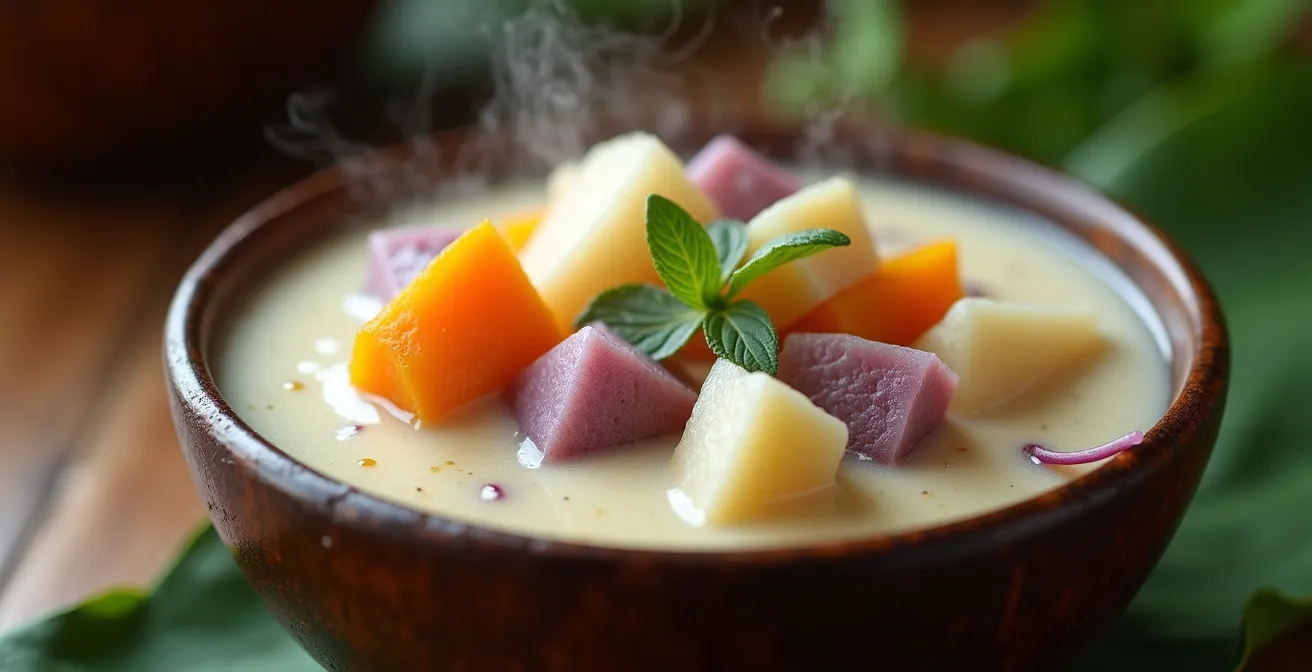
These dishes are not historical artifacts; they are part of a vibrant, living food culture that is now finding a voice on the mainland. For visitors, tasting this food is a direct way to connect with the culture. Finding these authentic flavors, however, requires knowing where to look, as they are distinct from the “bush tucker” often associated with Aboriginal cuisine.
Case Study: Mabu Mabu Restaurant
A leading example is Chef Nornie Bero, owner of the Melbourne cafe Mabu Mabu. Born on Mer Island, with a population of around 450 people, she brings the flavors of her childhood to a wider audience. As she notes, she grew up with a multicultural food culture in the Torres Strait long before it was common in the rest of Australia, showcasing the region’s history as a cultural crossroads.
Actionable Guide: Finding Authentic Islander Dishes
- Visit Mabu Mabu: Head to their cafe in Melbourne for contemporary Torres Strait cuisine.
- Attend Festivals: Look for food stalls at events like the Winds of Zenadth Cultural Festival in Cairns.
- Explore Thursday Island: If you travel to the straits, try Ma:Kai café for their famous crayfish pie.
- Seek Out Markets: The Thursday Island markets are known for Aunty Heidi’s Filipino-Torres Strait fusion spring rolls.
- Connect with Community Hubs: In major cities, Torres Strait Islander community centers often host cultural events featuring traditional food.
Ultimately, to eat Islander food is to taste the history, geography, and “saltwater consciousness” of the people.
Sea Rights vs Land Rights: How Maritime Culture Defines the Islander Identity?
The most profound difference between Aboriginal and Islander cultures lies in their relationship to country. Aboriginal law and spirituality are deeply rooted in the land, with “Land Rights” being a central pillar of political and cultural struggle. For Torres Strait Islanders, this concept is expanded to encompass the ocean. Their identity is defined by “Sea Rights”—a legal and cultural framework governing their relationship with the marine environment. This isn’t just about fishing; it’s about a holistic connection where the sea is an extension of country, providing sustenance, transport, and spiritual meaning.
This connection is not theoretical. While many Islanders now live on the mainland, their cultural heartland remains the islands. In fact, the 2021 Australian census revealed that 86.7% of the 4,124 people living on the islands identified as Torres Strait Islander, demonstrating a powerful and concentrated sense of place. This seafaring identity permeates every aspect of their culture, from mythology to art. As a seafaring people, the sea, sky, and land feature strongly in their stories and art, creating a unique artistic and narrative tradition.
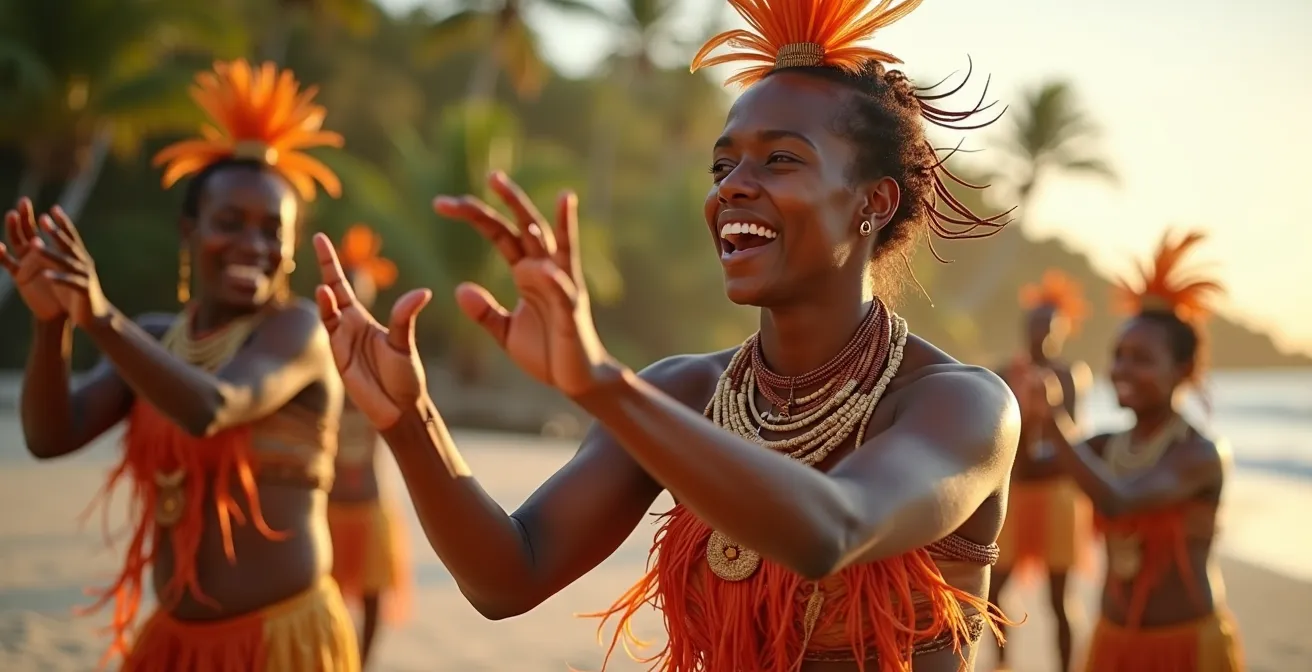
This maritime focus means that social structures, traditional laws, and resource management are all oriented around the patterns of the tides, the health of the reefs, and the migratory paths of marine animals. This “saltwater consciousness” is the fundamental operating system of the culture, a stark contrast to the primarily terrestrial focus of mainland Aboriginal societies.
It is in this legal and spiritual embrace of the sea that the most significant distinction lies.
Logistics of the TI Ferry: How to Reach the Administrative Center of the Straits?
The concept of a “seafaring people” becomes very real when one considers the practicalities of life in the Torres Strait. The region is an archipelago of over 270 islands, and movement between them has always depended on mastery of the sea. Today, this maritime reality continues to shape daily life. Reaching Thursday Island (Waibene), the administrative and commercial hub of the Torres Strait, is a lesson in maritime logistics. There are no bridges connecting it to the mainland; access is exclusively by air and sea, reinforcing the region’s distinct, water-bound character.
For a visitor, the journey itself is part of the cultural experience, highlighting the isolation and self-sufficiency that has defined Islander life for millennia. The most common route involves flying from a major Queensland city like Cairns to neighboring Horn Island (Ngurapai), followed by a short ferry ride across to Thursday Island. This two-step process is a daily reminder of the aquatic geography. The table below outlines the primary options for reaching this unique administrative center.
| Route Option | Starting Point | Duration | Key Information |
|---|---|---|---|
| Air + Ferry | Cairns | 2.5 hours flight + 10 min ferry | Fly to Horn Island, then ferry to TI |
| Ferry Direct | Seisia (Cape York) | 2-3 hours | Less frequent, seasonal service |
| Charter Boat | Bamaga | Variable | Private tours with cultural guides |
This reliance on sea and air travel is not just an inconvenience; it is a modern reflection of the ancient seafaring traditions that continue to define the Torres Strait Islander identity.
The Importance of the Rattle: Listening for the Unique Sound of Island Music
Every culture has its own unique soundscape, and the Torres Strait is no different. The music is characterized by resonant group singing and the use of distinctive instruments that create a rich, percussive texture. One of the most defining sounds is that of the goul, or rattle, often made from bean pods or nuts like the seeds of the Gose tree. When shaken, these instruments produce a sharp, rustling sound that evokes the gentle washing of waves on a shore or the rustle of palm fronds in a sea breeze. This sound is the sonic heartbeat of Islander music and dance.
Alongside the rattle, the warup, a traditional hourglass-shaped drum, provides a deep, resonant beat. The combination of the deep boom of the drum and the high-pitched swish of the rattle is instantly recognizable and entirely distinct from the sound of the didgeridoo and clapsticks that are so iconic of mainland Aboriginal music. This is not to say one is better, but to highlight their fundamental difference in timbre, rhythm, and origin. The sonic identity of the Torres Strait is tied to the materials and sounds of its tropical, coastal environment.
This music is not just for performance; it is a vessel for storytelling, carrying ancient myths, histories of voyages, and celebrations of community. To listen to Islander music is to hear the “saltwater consciousness” given voice. It is a powerful, auditory way to understand the culture on its own terms.
The absence of the didgeridoo and the presence of the rattle and warup drum are clear auditory markers of a culture shaped by a different land and a different sea.
Why Drinking Water Isn’t Enough: The Importance of Electrolytes in the Tropics?
The physical environment of the Torres Strait profoundly shapes not just culture, but the very biology of daily life. The region is defined by a tropical maritime climate with consistently high temperatures and, more importantly, extreme humidity. Unlike the dry heat of Central Australia, where sweat evaporates quickly, the high humidity of the tropics means perspiration is less effective at cooling the body and leads to a much greater loss of essential minerals, or electrolytes.
For visitors and locals alike, this means that simply drinking water is often not enough to stay properly hydrated. Replenishing lost salts like sodium, potassium, and magnesium is crucial to avoid heat exhaustion, fatigue, and lethargy. This environmental pressure has led to a deep, traditional understanding of hydration that is integrated into the diet. The most iconic and effective natural source of electrolytes in the islands is the fresh green coconut (kulap). The water inside a young coconut is naturally sterile and packed with the exact minerals the body loses through sweat.
This is another tangible expression of the “saltwater consciousness”—an intimate knowledge of the coastal ecosystem and how to use its resources to thrive in a demanding climate. Proper hydration is not just a health tip; it’s essential for having the energy to fully engage with the vibrant culture and appreciate the beauty of the islands.
It is a practical reminder that this is a culture finely tuned to the specific challenges and gifts of its tropical marine home.
Irritability and Heat: Understanding the Psychological Effect of Constant Humidity
The climate of the Torres Strait doesn’t just pose a physical challenge; it has a distinct psychological effect. The relentless combination of heat and high humidity can create a pervasive sense of lethargy and, for some, increased irritability. This phenomenon, sometimes colloquially referred to as “tropical ennui” or “mango madness,” is a well-known aspect of life in the humid tropics worldwide. It is a physiological response to the body working overtime to cool itself in an environment where sweat doesn’t evaporate efficiently.
This constant environmental pressure subtly shapes the rhythm of life. The pace tends to be slower and more deliberate, especially during the hottest parts of the day. There is an unspoken understanding that energy must be conserved. For an outsider, this can be misinterpreted as a lack of urgency, but it is, in fact, a wise and necessary adaptation to a climate that punishes haste. This shared experience of navigating the psychological weight of humidity becomes a subtle but unifying aspect of the local culture.
Understanding this effect is key for any visitor wishing to connect respectfully. It fosters patience and an appreciation for the local pace of life. It’s a reminder that the environment shapes not only what people do, but also how they feel and interact. This is a far cry from the dry, expansive heat of the Australian desert, which has its own set of psychological impacts, further differentiating the lived experience of Islanders from that of many mainland Aboriginal communities.
This shared adaptation to the humid climate is another layer of the distinct identity of the Torres Strait.
Key Takeaways
- True Islander identity is rooted in a “saltwater consciousness”—a deep connection to the sea that shapes law, society, and spirituality.
- The Torres Strait Islander flag is rich with specific maritime symbolism, including the Dhari headdress and a star representing five distinct island groups.
- The culture can be experienced through its unique cuisine, like Sop Sop, and heard in the percussive sounds of the goul rattle and warup drum, distinct from mainland instruments.
Exploring the Daintree: Why You Need an Indigenous Guide for the Full Story?
The ultimate expression of the difference between Aboriginal and Torres Strait Islander identity is in how individuals define themselves. While the title of this section mentions the Daintree—a mainland area—the core lesson applies everywhere: specificity is paramount. As a visitor, one of the most respectful things you can do is to understand that identity is local. Just as you wouldn’t call a Scottish person English, you shouldn’t use “Aboriginal” as a catch-all.
This is particularly true for Torres Strait Islanders, whose identity is inextricably linked to their specific home island. The Australian Institute of Aboriginal and Torres Strait Islander Studies (AIATSIS) highlights this crucial point by stating that Torres Strait Islander people prefer to use the name of their home Island to identify themselves to outsiders. For example, a person is not just an “Islander”; they are a Saibai man, a Meriam woman, or a Moa person. This practice underscores a worldview where the micro-identity of one’s home island holds the most weight, nested within the broader identity of the Torres Strait.
Torres Strait Islander people prefer to use the name of their home Island to identify themselves to outsiders, for example a Saibai man or woman is from Saibai.
– Australian Institute of Aboriginal and Torres Strait Islander Studies
This is why engaging an Indigenous guide, whether in the Daintree or the Torres Strait, is so vital. They provide more than facts; they provide context, nuance, and the correct terminology. They can explain the specific stories, laws, and relationships tied to that particular place, moving beyond generalizations to offer a true, authentic understanding. Without this guidance, a visitor is left with only a surface-level appreciation.
By listening, asking, and using specific and respectful language, you move from being a tourist to a respectful visitor, acknowledging the profound and beautiful distinctions that define Australia’s First Peoples.
Frequently Asked Questions about the Torres Strait
Why is the Torres Strait climate particularly dehydrating?
The extreme humidity and heat of the tropical maritime climate causes faster mineral loss through perspiration than dry heat environments.
What natural electrolyte source is traditionally used in the islands?
Fresh green coconuts (kulap) are a natural source of electrolytes readily available and deeply integrated into island life.
How does proper hydration affect the travel experience?
Staying properly hydrated is essential for having energy to engage with cultural activities and fully appreciate the islands without heat exhaustion.