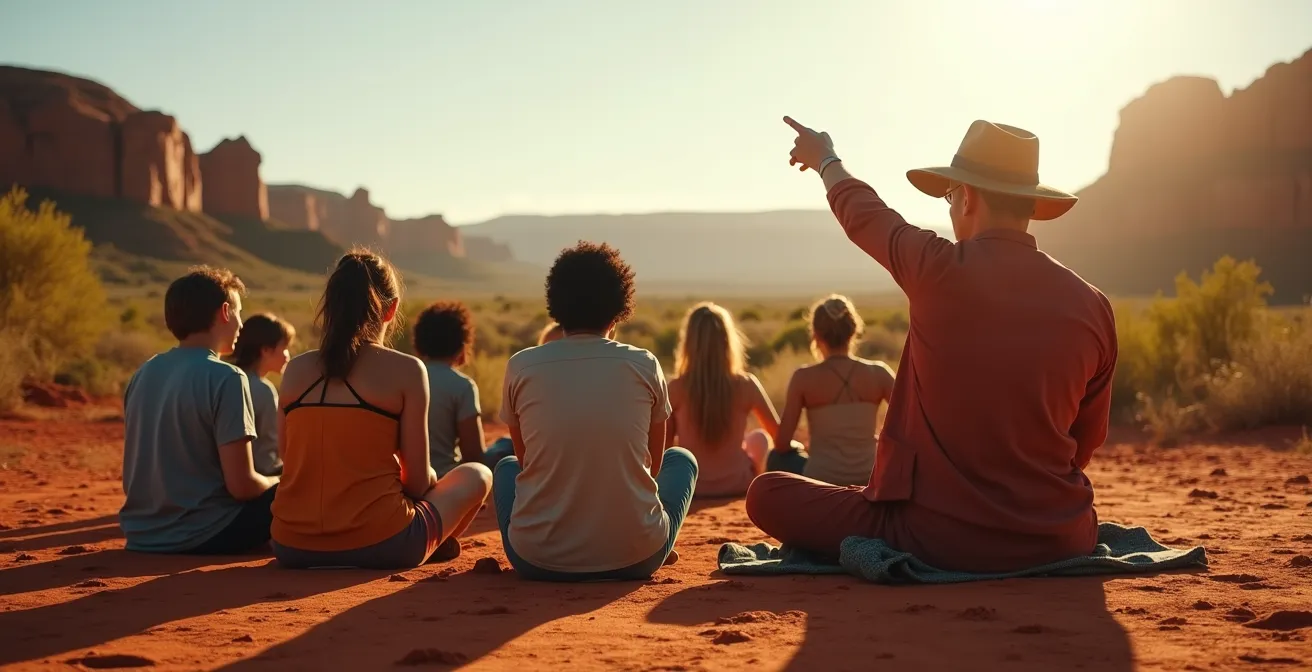
Many well-meaning travelers fear asking the wrong question on an Indigenous tour, focusing on a mental list of what’s forbidden. However, the key to respectful engagement isn’t memorizing rules, but understanding the foundational cultural frameworks you are entering. By grasping concepts like ‘Country’, community ownership, and living stories, you can shift from anxiety to confidence, asking questions that build bridges and show genuine, thoughtful interest.
The moment often arrives with a knot in your stomach. You’re on a guided walk through a landscape that feels ancient and alive, listening to a story that stretches back millennia. A question forms in your mind, born of pure curiosity, but it’s immediately followed by a wave of anxiety: “Is this offensive to ask? Will I seem ignorant? What if I say the wrong thing?” This fear of causing unintentional harm is a common barrier for travelers wanting to engage meaningfully with Australia’s First Peoples. It can lead to a hesitant silence that prevents the very connection both visitor and host might be seeking.
The standard advice often feels inadequate. You’re told to “be respectful” or “ask for permission,” but these guidelines don’t explain the principles behind the rules. They offer a “what” without the “why,” leaving you to navigate complex cultural situations with an incomplete map. This approach can feel like trying to learn a language by only memorizing a few phrases; you can get by, but you can’t have a real conversation. True respectful engagement isn’t about avoiding mistakes; it’s about understanding the worldview that informs the culture.
This guide offers a different approach. Instead of a checklist of dos and don’ts, we will explore the core cultural frameworks that underpin Aboriginal and Torres Strait Islander societies. By understanding the deep meaning of ‘Country’, the communal nature of knowledge, and the living power of creation stories, you’ll develop a situational awareness that empowers you. The goal is to shift your mindset from a fear of asking the wrong question to an ability to formulate questions that demonstrate empathy, understanding, and a genuine desire to learn. This is how you move from being a passive tourist to an engaged and welcome guest.
To help you navigate this journey, this article breaks down the essential concepts and practical situations you’re likely to encounter. From the spiritual significance of the land to the protocols around art and photography, each section will provide the context you need to interact with confidence and grace.
Summary: A Framework for Respectful Cultural Engagement
- Why “Country” Means More Than Just Land in Aboriginal Culture
- Asking Permission: Why Photographing People Requires Explicit Consent
- The Indigenous Art Code: How to Verify Your Souvenir Supports the Community
- Signage and Respect: Recognizing Restricted Areas in National Parks
- Garma Festival: Planning Your Trip Around Major Indigenous Gatherings
- Why the Creation Stories of Tjukurpa Dictate the Management of the Park
- Beyond Dot Paintings: Where to See Modern Urban Aboriginal Art
- Why a Guide Is Essential for Understanding Songlines on Walks
Why “Country” Means More Than Just Land in Aboriginal Culture
The first and most crucial mindset shift for any visitor is to understand the concept of “Country.” In Western thought, land is often seen as a commodity, a resource, or a backdrop for human activity. For Aboriginal and Torres Strait Islander peoples, Country is a living entity, infused with spirituality, ancestry, and identity. It is not something you own; it is something you belong to. This relationship is holistic, encompassing land, water, sea, sky, plants, animals, and the stories and spiritual beings that inhabit them.
Country is a source of physical and spiritual nourishment, a guide, and a family member. The connection is deeply personal and reciprocal. As a study on the wellbeing of Victorian Aboriginal peoples highlights, this trust is profound, with one participant explaining, “you can put your trust in the land because it is your ancestors; you know it’s going to guide you in the right direction and protect you.” Acknowledging this means recognizing that every part of the landscape has a story and a purpose.
Therefore, a respectful question is one that acknowledges this relationship. Instead of asking, “Who owns this land?” which imposes a Western framework of ownership, consider asking, “Who are the Traditional Custodians of this Country?” or “Could you tell me a little about your connection to this place?” These questions open the door to a deeper understanding, showing that you see Country not as a passive landscape, but as an active, living system to which people are intrinsically linked. This simple reframing from ownership to custodianship is the foundation of all respectful interaction.
Asking Permission: Why Photographing People Requires Explicit Consent
The advice to “ask before you take a photo” is common, but it barely scratches the surface of the underlying principles. In many Indigenous cultures, a person’s image, stories, and knowledge are not individual possessions but are part of a broader communal and cultural property. Asking for permission to take a photograph is not just a matter of politeness; it is a negotiation for the use of cultural and intellectual property. Indigenous peoples have the right to authorize or refuse the use of their likeness according to customary law.
This is why a quick nod or gesture may not be sufficient. Decision-making can be a communal process. An individual may need to consult with others or wait for the right people to be present before giving consent. A “no” should be accepted with grace and without question, as it may be tied to cultural protocols, ceremonies, or personal reasons that are not for public discussion. Rushing this process or showing impatience signals a lack of understanding of this fundamental respect for communal authority.
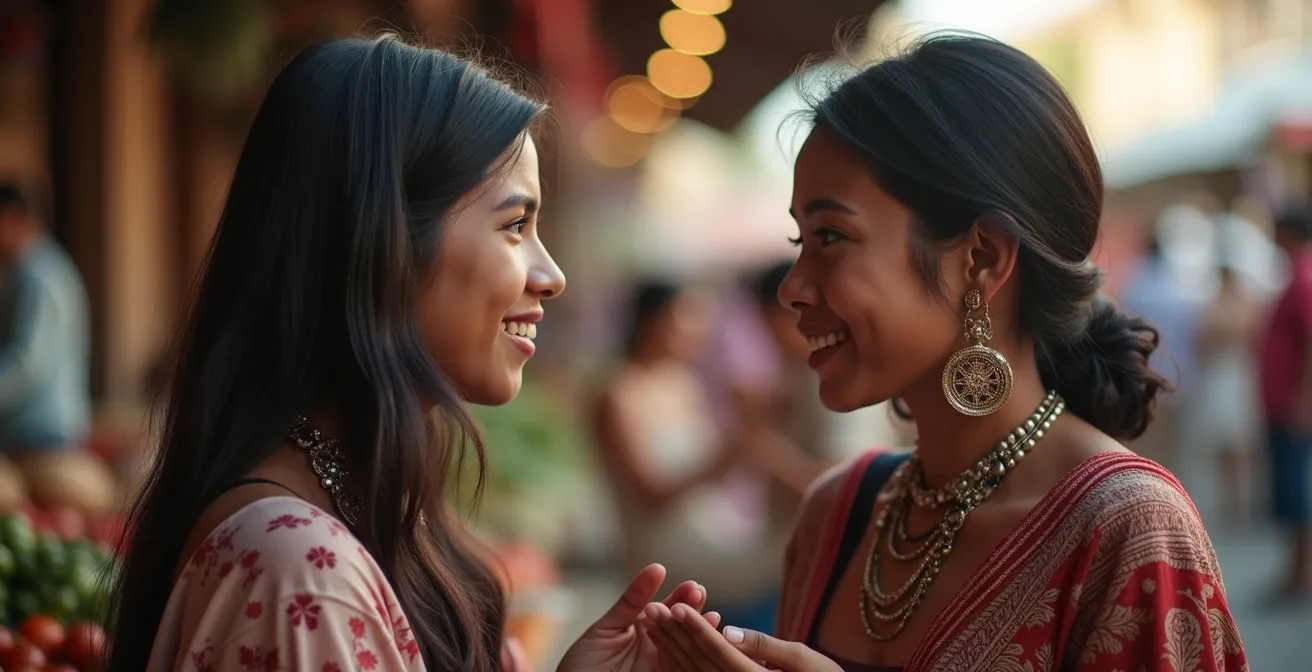
The most respectful approach is to prioritize connection over documentation. Engage in conversation first. Show genuine interest in the person, not just the “shot” they might provide. If a moment feels right, you can then ask, “I’m really enjoying our conversation. Would you be comfortable if I took a portrait of you?” This phrasing shows respect for their agency and comfort. The goal is reciprocal respect, where the interaction is more valuable than the image itself.
The Indigenous Art Code: How to Verify Your Souvenir Supports the Community
Bringing home a piece of Aboriginal art can be a meaningful way to remember your trip, but it’s crucial to ensure your purchase is ethical. The market is unfortunately flooded with inauthentic, mass-produced items that mimic Aboriginal styles but provide no benefit to the artists or their communities. Buying ethically is a direct way to show respect for the culture and contribute to its sustainability. The Indigenous art sector is a vital part of the economy, with data from 2024 showing between 12,000 and 16,000 Indigenous-run businesses in Australia, many of which are in the arts.
Ethical sourcing means asking the right questions before you buy. This is not an interrogation but a demonstration of genuine interest. A reputable dealer or artist will welcome your questions and be happy to share the story behind the work. Look for the Indigenous Art Code logo, which signifies that the dealer has committed to fair and ethical trade with Aboriginal and Torres Strait Islander artists. However, your best tool is curiosity. Engaging the seller transforms the transaction from a simple purchase into a cultural exchange.
By asking about the artist, their community, and the story depicted in the artwork, you are acknowledging that the piece is more than a decorative object. It is a vessel of story, law, and culture. A seller who can’t provide this information is a major red flag. This act of verification is a powerful way to ensure your money supports the artists directly and honors the living culture from which the art originates.
Action Plan: Questions to Verify Authentic Aboriginal Art
- Ask the seller: ‘Can you tell me about the artist and their community?’
- Request: ‘What is the story behind this specific piece?’
- Inquire: ‘Is this from a community-owned art centre?’
- Verify: ‘Can you provide documentation about the artist’s background?’
Signage and Respect: Recognizing Restricted Areas in National Parks
Many of Australia’s most iconic national parks, such as Uluru-Kata Tjuta and Kakadu, are the ancestral lands of Aboriginal peoples. These are not just wilderness areas; they are cultural landscapes where physical features are interwoven with creation stories, ceremonies, and law. Today, many of these parks are jointly managed by Traditional Owners and government agencies, a partnership that recognizes Aboriginal custodianship. For instance, in Victoria alone, over 1,225 square kilometres of parks are now jointly managed with Traditional Owners.
This joint management means that park rules are often a direct manifestation of cultural law. When you see a sign that says “Restricted Area” or “Please do not photograph,” it is not an arbitrary rule designed to inconvenience tourists. It is there to protect a sacred site, a place of cultural significance that may be reserved for specific ceremonies, gender-specific activities, or where the story is simply too powerful for the uninitiated. Disrespecting these signs is not just breaking a park rule; it is a profound violation of cultural law.
Case Study: Uluru-Kata Tjuta National Park
The management of Uluru-Kata Tjuta National Park is a prime example of this principle. The park is the spiritual heart of Australia for Anangu, the Traditional Owners. The decision to close the climb on Uluru in 2019 was a direct request from Anangu, who had long explained that climbing the rock was not only dangerous but also a deep desecration of a sacred site. The park’s rules, including areas where photography is forbidden, are a direct expression of Tjukurpa (Anangu law), ensuring the site is managed with the respect it deserves.
Your role as a visitor is to practice situational awareness. Pay close attention to all signage. If a path is closed or an area is marked as restricted, accept it without complaint. A respectful question to a guide might be, “I see this area is restricted. Could you share, if it’s appropriate, a general reason why such areas are protected?” This shows you are seeking to understand the principle, not challenge the rule.
Garma Festival: Planning Your Trip Around Major Indigenous Gatherings
Engaging with Indigenous culture can go beyond tours and galleries. Attending a public cultural festival, such as the Garma Festival in Arnhem Land or the Laura Aboriginal Dance Festival in Cape York, offers an incredible opportunity for immersion. These events are vibrant showcases of art, music, dance, and political discourse, providing deep insights into contemporary Indigenous life. However, they are not purely tourist events; they are significant cultural gatherings where you are a guest.
Planning a trip around such a festival requires a mindset of observation and respect. Your role is primarily to be a witness. There will be public performances and workshops you are welcome to join, but there will also be private ceremonies or community-only spaces. It’s crucial to understand and respect these boundaries. The goal is to participate where invited and to observe respectfully from a distance when not.
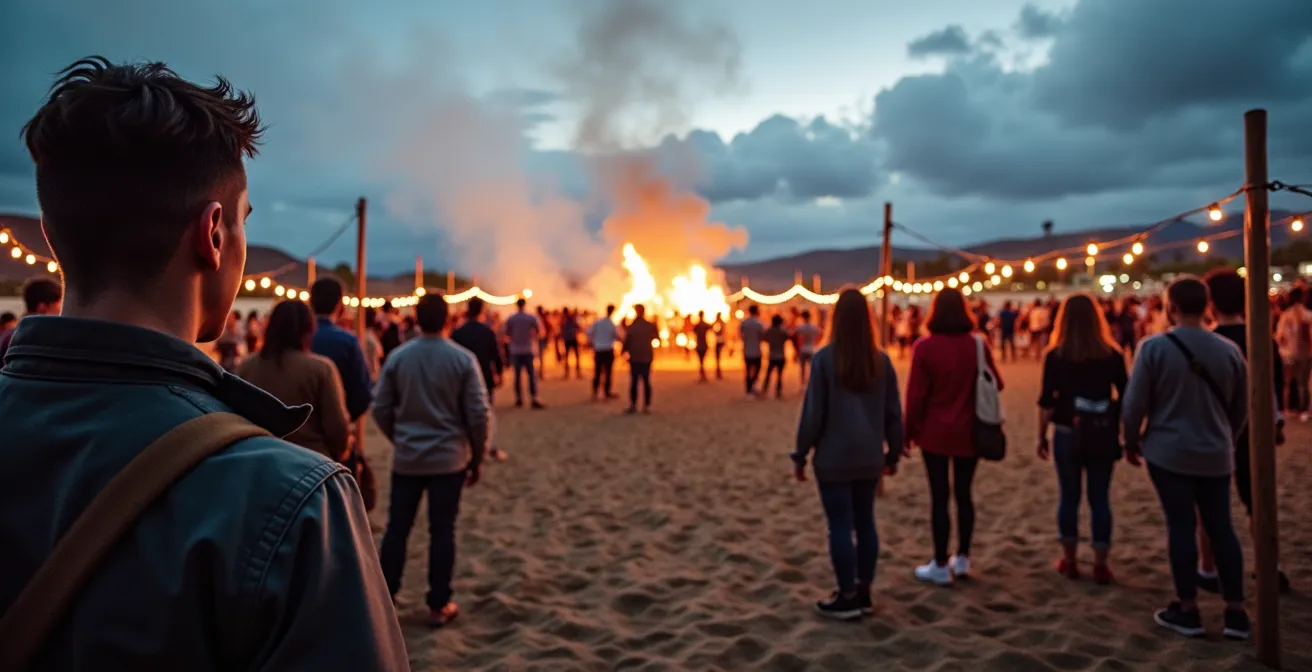
This is where tourism can be a force for good. By attending, you are showing support for the celebration and continuation of culture. As Nicole Mitchell, an executive with Discover Aboriginal Experiences, notes, “Tourism can be a powerful driver for positive change and sustainability of cultures.” Your presence, when coupled with respectful behavior—such as buying directly from artists, listening intently during forums, and maintaining a respectful distance during ceremonies—contributes positively to this dynamic. Asking questions of festival volunteers or at information booths about appropriate etiquette is a sign of a thoughtful visitor.
Why the Creation Stories of Tjukurpa Dictate the Management of the Park
To truly grasp why certain areas are restricted or why a guide is essential, one must appreciate the concept of creation stories, often known as The Dreaming or, in the Central Desert, Tjukurpa. These are not myths or fairytales. They are a complex system of law, history, social code, and spiritual guidance that explains how the world came to be and how life should be lived. This cultural history is the longest in the world, with origins dating back at least 50,000 years, making it a system of profound complexity and resilience.
Tjukurpa stories are etched into the landscape itself. A rock formation is not just a geological feature; it is the physical remnant of a creation ancestor’s journey. A waterhole is not just a source of water; it is a sacred site tied to a specific story and law. These stories dictate everything from land management practices, like controlled burning, to social obligations and kinship systems. The landscape is a textbook, and the stories are the law of the land.
The growing interest in these experiences is significant; in 2019, before the pandemic, a reported 1.4 million international visitors participated in Indigenous tourism, a number that had been growing steadily. This influx makes it even more critical for visitors to understand they are stepping into a legal and spiritual framework. A question that ignores this context—for example, “Why can’t I just walk over there?”—misses the point entirely. A better question would be, “Does this part of the landscape have a story you are able to share?” This acknowledges that knowledge is earned and may be restricted, showing deference to the cultural framework you are in.
Beyond Dot Paintings: Where to See Modern Urban Aboriginal Art
A common misconception is that Aboriginal art is confined to traditional “dot paintings” from the desert. While this iconic style is a powerful and important art form, Aboriginal and Torres Strait Islander culture is dynamic, diverse, and constantly evolving. Today, some of the most exciting Indigenous art is being created in urban centers, blending traditional themes with contemporary mediums and perspectives.
Exploring modern urban art is a fantastic way to engage with the issues, stories, and identities of Indigenous peoples today. Cities like Sydney and Melbourne are hubs for this creative expression. You can find it in dedicated galleries, but also in unexpected places, from botanic gardens to the Sydney Harbour Bridge. These experiences challenge stereotypes and reveal the incredible adaptability and resilience of the world’s oldest living culture. They offer a more complete picture of what it means to be an Aboriginal person in 21st-century Australia.
Case Study: The Evolution of Art on the Tiwi Islands
The art of the Tiwi Islands, near Darwin, provides a compelling look at this evolution. While rooted in ancient traditions like Pukumani poles, Tiwi artists are renowned for their vibrant, contemporary designs in textiles, prints, and paintings. On a ‘Tiwi by Design’ tour, visitors are welcomed with a traditional smoking ceremony before participating in screen-printing workshops, creating their own modern piece of art under the guidance of local artists. This fusion of ancient ceremony and contemporary practice is a perfect example of a thriving, living culture.
To discover this vibrant scene, seek out experiences that showcase this diversity. Instead of asking “Where can I see dot paintings?”, try asking a tourism operator or gallery owner, “Where can I experience contemporary art by local First Nations artists?” Here are a few places to start in Sydney:
- Visit the Australian Museum’s First Nations Gallery Tours (Waranara) for contemporary interpretations.
- Explore Sydney Opera House’s programs for modern cultural expression.
- Join Aboriginal Heritage Tours at the Royal Botanic Gardens to see living culture in an urban setting.
- Experience the Burrawa Aboriginal Climb on the Sydney Harbour Bridge for unique urban cultural perspectives.
Key Takeaways
- Shift your mindset from a list of rules to understanding the underlying cultural framework of Country, community, and story.
- Recognize that images, art, and stories are often communal cultural property, requiring more than just a nod for consent.
- Show respect by asking thoughtful questions that demonstrate genuine interest in the artist, their community, and the story behind the work.
Why a Guide Is Essential for Understanding Songlines on Walks
A walk through the Australian bush can be a beautiful experience, but without a guide, you are only seeing the surface. You are missing the “Songlines”—the intricate pathways of knowledge, story, and travel woven across the continent by creation ancestors. These are often referred to as the “footprints of the ancestors,” and they are invisible to the untrained eye. A guide from the local language group is not just showing you the way; they are the authorized keeper of the stories of that specific place.
They can explain how a particular bend in a river, a grove of trees, or a rocky outcrop is a chapter in a much larger, continent-spanning epic. This knowledge is not universal; it is highly specific and belongs to the Country you are walking on. Attempting to interpret these things on your own is not only impossible but also disrespectful. The stories belong to the people of that place, and they are the only ones with the authority to share them. An Indigenous guide provides a bridge between your world and the deep time of the landscape.

Every part of Australia is Aboriginal Country, and every part of that country has a series of stories and experiences that are unique to that place.
– Nicole Mitchell, Executive Officer of Discover Aboriginal Experiences
Engaging a guide is the ultimate act of respect. It acknowledges that you are a guest and that you require permission and wisdom to understand where you are. Your questions can then become more meaningful. Instead of “What’s that bird?”, you might ask, “Does that bird have a story in this place?” This small change shows you understand that everything is connected within a larger narrative. A guide is your key to unlocking a far deeper, more profound experience of the Australian landscape.
By embracing this framework of understanding, you can transform your journey. You move from a tourist who is afraid to speak to a traveler who knows how to listen, how to observe, and how to ask questions that open doors to genuine, respectful, and unforgettable human connection.