In summary:
- A lighthouse stay is a logistical challenge, not a hotel visit. Success requires a survivalist mindset focused on resource management.
- Water is your most critical finite resource. Understand the lighthouse’s collection system (often rainwater cisterns) and use water with extreme discipline.
- Access is not guaranteed. The final kilometer can be impassable, requiring you to plan for difficult terrain, tides, and weather.
- Emergency preparedness is non-negotiable. With help hours away, you are your own first responder. A robust communication plan is essential.
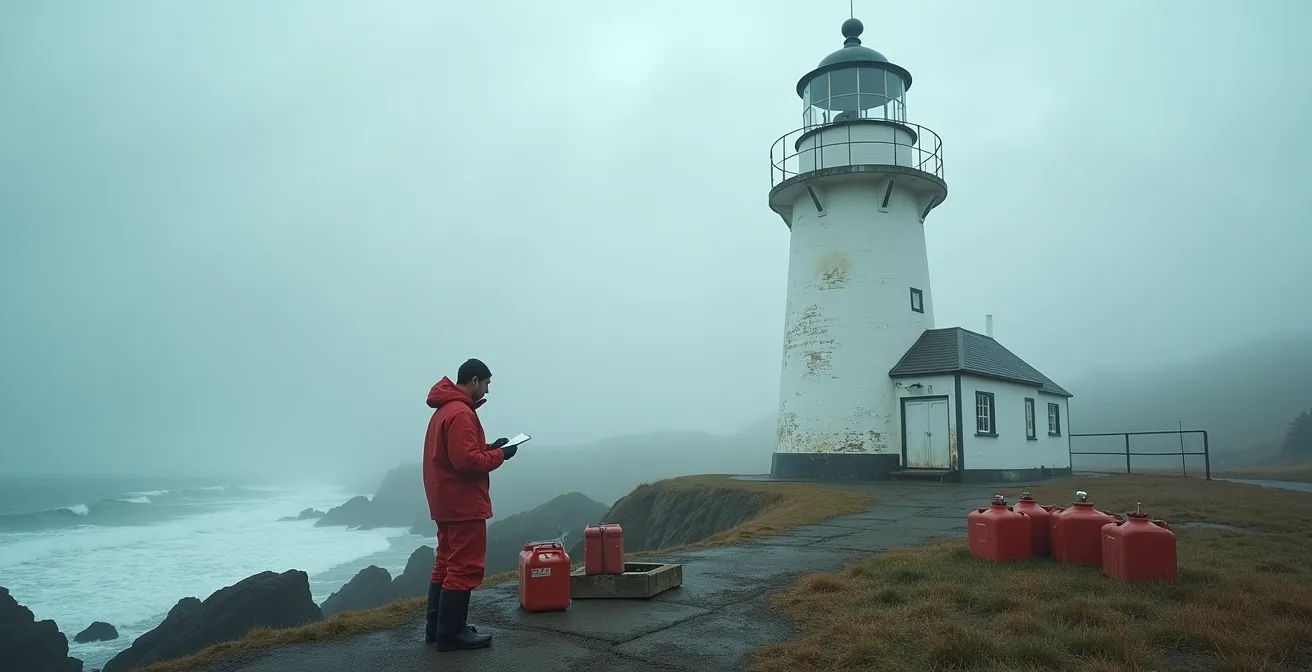
The image of a lighthouse stay is steeped in romance: windswept vistas, crashing waves, and a profound sense of seclusion with a loved one. It’s an escape from the modern world, a chance to inhabit a piece of maritime history. But the reality of living in these magnificent, isolated structures for a week is less about poetry and more about pure logistics. While many guides focus on what to pack, they often miss the fundamental point: you are not checking into a remote hotel; you are becoming a temporary station manager.
The core challenge lies in the clash between the romantic ideal and the unforgiving reality of a self-sufficient outpost. These heritage buildings were never designed for modern convenience. They operate on closed-loop systems for water and power, and their access routes were built for function, not for easy tourist travel. Forgetting this truth can turn a dream vacation into a stressful ordeal. The key to a successful stay isn’t a longer packing list, but a complete shift in mindset.
This guide abandons the typical travel advice. Instead, it adopts the logistical, survivalist mentality of a lighthouse keeper. We will not just tell you what to bring, but why the unique constraints of the environment demand a different approach to planning. By understanding the systems you’re about to inhabit—from the howling winds and the precious water supply to the unforgiving final kilometer of access—you can prepare for the reality of isolation and truly master your unique adventure.
For those who prefer a visual format, the following video offers an immersive tour inside a restored lighthouse accommodation, perfectly complementing the practical advice in this guide.
This article provides a structured approach to your preparation. We will deconstruct the core logistical pillars of a week-long lighthouse stay, providing the tactical knowledge you need to operate with confidence and self-reliance. The following summary outlines the critical areas we will cover.
Summary: The Keeper’s Handbook to Lighthouse Isolation
- The roaring forties: how to sleep when the wind is howling at 100km/h?
- Tank water limits: why long showers are impossible in lighthouse accommodation?
- The final kilometer: do you need a 4WD to reach the lighthouse driveway?
- The glass prism: why you cannot enter the lantern room without a guide?
- Response times: what to do if you get injured 2 hours from an ambulance?
- Supermarkets and gear shops: where to buy bulk water and fuel in Alice?
- The essential items to bring to Whitehaven where there are no shops
- Renting a 4WD for the Outback: 5 Checks to Avoid a Breakdown
The roaring forties: how to sleep when the wind is howling at 100km/h?
The first sensory shock of a lighthouse stay is often auditory. These structures are built to withstand phenomenal forces, and in high winds, they will groan, creak, and shudder. The wind itself doesn’t just whistle; it can create a low, vibrating hum that feels like it’s inside your bones. For the unprepared, this constant sonic assault can make sleep impossible and turn a romantic escape into a source of anxiety. The keeper’s mindset requires you to manage this sensory input, not just block it out. It’s about psychological adaptation, not just better earplugs.
Instead of fighting the noise, the goal is to reframe it. The sounds are a direct connection to the history and function of the building—the very reason you are there. Experienced keepers learn to differentiate between normal structural groans and sounds that might indicate a problem. For a temporary guest, the key is to create a sensory management strategy before you arrive. This involves both blocking unwanted stimuli and replacing it with controlled sounds.
A practical approach includes a “Sensory Management Kit.” This should contain high-quality, noise-canceling headphones and pre-downloaded white noise or nature sound apps on your phone (as streaming may be unavailable). Furthermore, the iconic sweeping light from the lantern can be just as disruptive as the wind. A high-quality blackout eye mask is non-negotiable. By managing both light and sound, you create a personal sanctuary, allowing you to appreciate the power of the elements from a position of comfort and control rather than being overwhelmed by them.
Tank water limits: why long showers are impossible in lighthouse accommodation?
In a remote lighthouse, water is not an infinite utility; it’s a finite, life-sustaining resource that you are personally responsible for managing. Most of these historic accommodations are not connected to municipal water lines. Their supply is almost exclusively sourced from rainwater collected from the roofs and stored in underground cisterns. This makes the water system a closed loop with a fixed capacity. A long, hot shower isn’t a simple luxury—it’s an act that can deplete the water supply for the rest of your stay.
Understanding this system is critical. The historical method of using cisterns was a brilliant feat of engineering for self-sufficiency. As one historical account of the Jupiter Inlet Lighthouse notes, this method was essential for survival. Rainwater was channeled through gutters into large storage tanks, providing a lifeline where natural sources were unreliable. When you turn on the tap, you are drawing from this same limited reserve. The pressure might be low, the water might be cool, and its use must be governed by a strict conservation mindset.
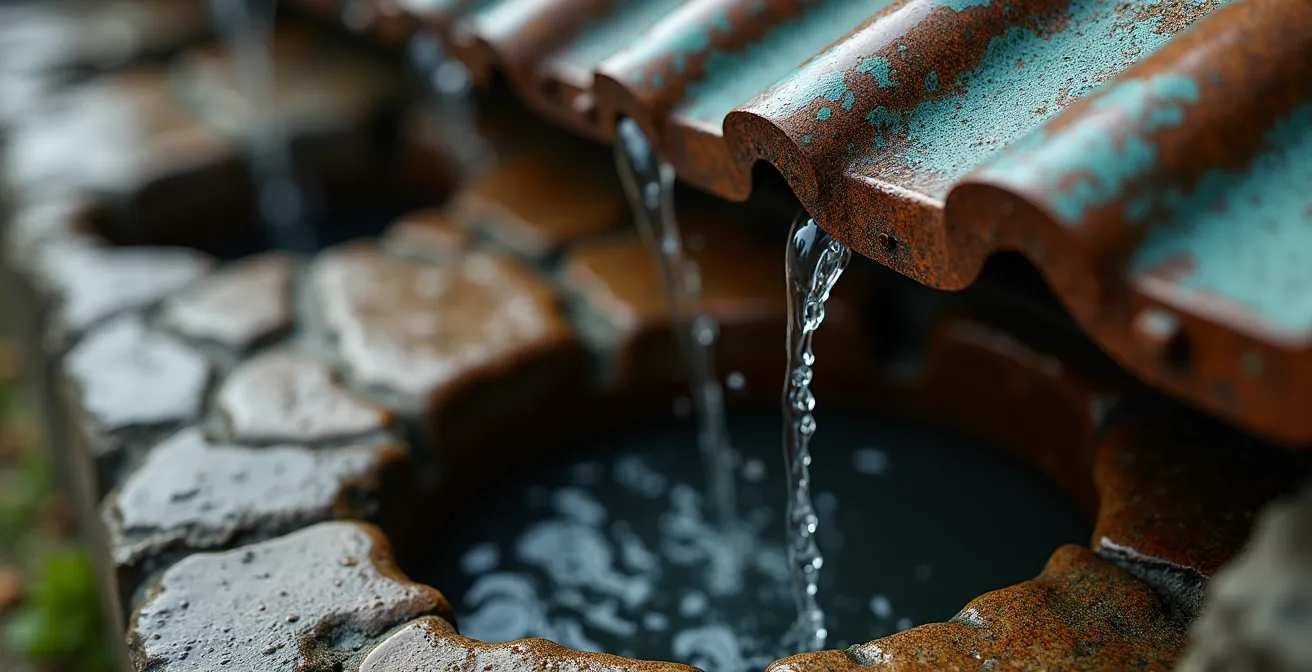
Adopting a keeper’s discipline means treating every drop as precious. This translates into specific actions: “navy showers” (water on to get wet, water off to lather, water on to rinse), capturing cold water while you wait for it to heat up for use in cooking or cleaning, and ensuring all taps are fully closed. You are not a guest consuming a service; you are a custodian of a vital, limited resource. Ignoring this reality is the fastest way to find yourself in a serious logistical bind, miles from any alternative supply.
The final kilometer: do you need a 4WD to reach the lighthouse driveway?
The journey to a lighthouse doesn’t end when your GPS says “you have arrived.” The most challenging part of the trip is often the last kilometer—the unpaved, tide-dependent, or rugged track connecting the main road to the keeper’s cottage. This “last-mile logistics” is a critical planning phase that many visitors overlook. Access roads can be little more than gravel paths, sandy tracks, or even beaches that are only passable at low tide. Arriving in a standard sedan could mean getting stuck or having to haul your supplies over a considerable distance.
Your vehicle choice is paramount. Before booking, you must get a definitive answer from the property manager: is a 4WD vehicle required or simply recommended? The difference is crucial. A recommendation might mean a standard car can make it in good weather, but a requirement means you will not get through without high clearance and all-wheel drive. The physical effort of portaging supplies should not be underestimated. As one renovator of a remote lighthouse shared, she had to haul materials a half mile from the beach parking lot, with heavy appliances delivered by barge. You must assume a similar manual labor component if your vehicle cannot reach the door.
A multi-stage access strategy is the solution. First, pack your supplies in modular, manageable bags or crates rather than large, heavy suitcases. This makes multiple trips from a parked car feasible. Second, always check tide charts for your arrival and departure day if coastal access is involved. Finally, prepare a separate “Go-Bag” with absolute essentials (medication, water, snacks, documents) that you can carry easily if the main access route is unexpectedly washed out or blocked. This foresight is the difference between a smooth arrival and a logistical nightmare.
The glass prism: why you cannot enter the lantern room without a guide?
The crown jewel of any lighthouse is the lantern room, home to the magnificent Fresnel lens. It’s natural to want to get up close to this intricate assembly of glass prisms. However, in almost all lighthouse accommodations, access to the lantern room is strictly prohibited without an official guide. This isn’t an arbitrary rule to spoil your fun; it is a critical measure to preserve an irreplaceable and surprisingly fragile piece of history. The lens is the heart of the lighthouse, and its protection is the number one priority.
The primary danger is contamination. As the U.S. Lighthouse Society authoritatively states, “The delicate Fresnel lens can be permanently damaged by the oils, salts, and acids from a single fingerprint.” The acid from human touch can etch the delicate, precisely ground glass, permanently degrading its optical quality. Over time, thousands of such touches would render the lens cloudy and ineffective. Furthermore, the complex brass framework that holds the hundreds of individual prisms is also vulnerable to damage from accidental bumps or scrapes. The entire apparatus is a finely tuned scientific instrument, not a durable tourist attraction.

Think of the lantern room not as part of your rental, but as a museum gallery that happens to be attached to your accommodation. Respecting this boundary is part of the keeper’s code. Many lighthouses offer scheduled, guided tours of the lantern room, often led by the hosts or local preservation society members. These tours are your opportunity to see the lens. By participating in an official tour, you not only get to experience the lens safely, but your tour fee often contributes directly to the ongoing preservation and maintenance of the structure. It’s a small price to pay to protect the very history you’ve come to enjoy.
Response times: what to do if you get injured 2 hours from an ambulance?
When you stay at a remote lighthouse, you are accepting a fundamental trade-off: unparalleled seclusion in exchange for delayed emergency response. A twisted ankle, a deep cut, or a sudden allergic reaction is a manageable inconvenience in the city. In a location two hours from the nearest ambulance, it can escalate into a serious crisis. You are the first responder. A survivalist mindset means conducting a “failure point analysis” before your trip, identifying potential medical issues, and having a clear, tiered protocol for communication and self-care.
Your primary responsibility is to be able to contact the outside world when standard cellular service fails. This requires a hierarchy of emergency communication devices. A satellite phone allows for nuanced, two-way conversation with emergency services or property managers, while a Personal Locator Beacon (PLB) is the ultimate last resort, sending a distress signal with your exact coordinates for immediate rescue. Relying solely on your mobile phone is a gamble you cannot afford to take. Additionally, you must pack a comprehensive first-aid kit far beyond the typical travel-sized version, including items to manage trauma, severe allergic reactions, and common injuries.
The final layer of your emergency plan is information. Before you lose connectivity, download offline maps of the area and robust first-aid apps. This preparation allows for a degree of self-guided response. The most critical information is your own: your precise location and your medical needs. The following plan outlines the essential steps for establishing a robust emergency protocol.
Action Plan: Emergency Protocol for Remote Lighthouse Stays
- Establish Communication Hierarchy: Prioritize your emergency devices. A Personal Locator Beacon (PLB) is for dire emergencies requiring immediate rescue. A Satellite Phone is for nuanced assistance when cellular coverage is unavailable.
- Pre-load Digital Resources: Download offline maps of the surrounding area and comprehensive first-aid applications onto your devices before you leave reliable service areas.
- Create a Vital Information Card: Prepare a physical, laminated card listing all vital medical information for your group (allergies, conditions, medications) and the precise GPS coordinates of the lighthouse.
- Pack a Trauma-Ready First-Aid Kit: Go beyond basic bandages. Include items like a tourniquet, compression bandages, antiseptic wipes, splinting materials, and any necessary personal medications like EpiPens.
- Know Your Evacuation Route: Clearly understand and have a map of the primary and secondary routes to exit the property, including considerations for tides or weather that may block them.
Supermarkets and gear shops: where to buy bulk water and fuel in Alice?
Every remote journey has its “Alice Springs”—a final outpost of civilization where you must transition from tourist to expedition planner. This last town is your one and only chance to procure all the food, water, fuel, and supplies for your entire period of isolation. Underestimating this crucial supply run is the most common mistake made by first-timers. You must enter this final supermarket with a detailed manifest, a clear understanding of consumption rates, and a “no-second-chances” mentality. There is no “popping out” for a forgotten item.
Water is your top priority. While your lighthouse may have tank water for basic washing, you must assume it is not potable unless explicitly stated. You need to carry in all your drinking and cooking water. The amount required is not a guess; it’s a calculation based on activity level and environmental conditions. As a baseline, a person needs a significant amount of water daily just to survive in remote conditions, and this need increases dramatically with heat or physical exertion. The following table provides a clear framework for this critical calculation.
This table, based on an analysis of remote travel needs, helps quantify your bulk water purchase.
| Activity | Water Required (L/person/day) | Desert Conditions Multiplier |
|---|---|---|
| Drinking | 3-4 | 1.5x |
| Cooking | 2 | 1x |
| Basic Hygiene | 2 | 0.5x |
| Emergency Reserve | 2 | 2x |
Beyond water, this is your moment to stock up on non-perishable food, any necessary fuel for generators or heaters, and last-minute gear. This includes practical items like high-strength duct tape, cable ties, and spare fuses—small things that can fix big problems. Your shopping list should be built around a meal plan that requires minimal refrigeration and uses water efficiently. Think in terms of calories and reliability, not gourmet ingredients.
The essential items to bring to Whitehaven where there are no shops
Many lighthouses are situated within or near protected marine parks or nature reserves—pristine environments we can consider “Whitehaven” archetypes. These are zero-impact, no-infrastructure zones. There are no bins, no shops, no freshwater taps. Your presence must be entirely self-contained, and your goal is to leave absolutely no trace. This requires a specific packing list focused on minimizing environmental impact and managing unique local hazards, like marine life.
The principle of “pack it in, pack it out” is absolute. You will need a robust double-bagging system for all waste, including food scraps. Using odor-proof storage bags is essential to avoid attracting wildlife to your cottage. Your choice of toiletries is also critical. Sunscreen, in particular, must be reef-safe, meaning it is a zinc-based formula free of oxybenzone and octinoxate, which are known to damage coral reefs. This isn’t just a suggestion; in many marine parks, it’s the law.
Local wildlife also dictates specific packing needs. In many coastal areas, jellyfish season (often from November to May) requires a full-body stinger suit for anyone entering the water. A small, sealed container of vinegar is also an essential first-aid item for treating stings. The responsibility for being self-sufficient in these remote areas is growing as resources become more strained globally. Indeed, the World Economic Forum’s analysis projects that global water demand is set to increase massively, putting more pressure on individuals to be self-reliant in off-grid locations. Finally, the combination of high humidity and salt spray is lethal to electronics. Protect your phone and camera with dedicated dry bags and pack silica gel packs to absorb moisture.
Key takeaways
- Adopt a Keeper’s Mindset: You are not a guest; you are a temporary station manager responsible for managing a complex, isolated system.
- Master Resource Scarcity: All resources—especially water and power—are finite. Your first priority is to understand the system’s limits and operate within them.
- Plan for Failure, Not Just Fun: Identify all potential failure points (access, injury, weather) and have a clear, pre-planned protocol for each. Your safety depends on your preparation.
Renting a 4WD for the Outback: 5 Checks to Avoid a Breakdown
If your lighthouse access requires traversing “Outback” style terrain—unsealed roads, sand, or rough tracks—your rental 4WD is not just transportation; it’s your most critical piece of survival equipment. A breakdown here doesn’t mean a simple call to a tow truck; it could mean being stranded for hours or even days. Before you leave the rental depot, you must conduct a thorough pre-departure inspection to ensure the vehicle is genuinely equipped for the task, not just a standard SUV with a 4WD badge.
Your inspection must go beyond checking for dents and scratches. You are verifying the vehicle’s remote-area capability. Start with the tires. They must be LT (Light Truck) rated All-Terrain tires, not standard Highway (H/T) tires. Check for uneven wear and any damage to the sidewalls, which are vulnerable on rocky tracks. Next, inspect the recovery gear. Ensure the vehicle comes with rated shackles and an intact snatch strap, and that you know where they are and how to use them. A vehicle without its own recovery gear is not fit for remote travel.
The mechanical and communication systems are just as important. A key upgrade for remote travel is a secondary fuel filter, which helps prevent engine failure from contaminated fuel bought in small towns. Finally, if the rental company provides a satellite phone or PLB, you must verify that it is fully charged and that the service subscription is active before you drive away. Relying on a device with a dead battery is a critical failure. The following checklist, based on recommendations from a guide to renting lighthouse accommodations, is non-negotiable.
| Check Item | What to Look For | Red Flags |
|---|---|---|
| Tires | LT (Light Truck) All-Terrain construction | Highway tires, uneven wear, sidewall damage |
| Recovery Gear | Rated shackles, intact snatch strap | Missing equipment, frayed straps |
| Fuel System | Secondary fuel filter installed | Single filter only, contamination signs |
| Communications | Charged satellite phone/PLB | Dead battery, expired subscription |
Ultimately, a successful lighthouse stay hinges on this logistical mindset. By shifting your perspective from that of a passive tourist to an active, prepared station manager, you transform potential challenges into manageable parts of an unforgettable adventure. Apply this guide as a practical framework for your planning, and you will be ready to embrace the profound and rewarding reality of life at the edge of the world.