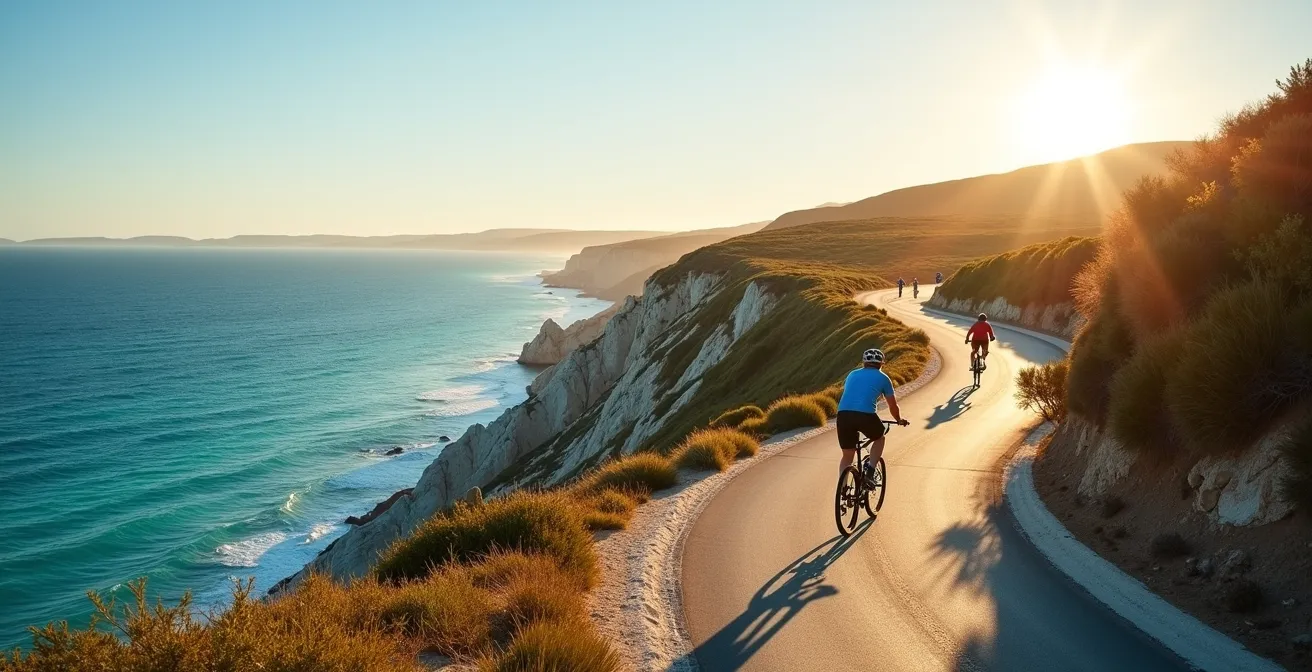
The 22km Rottnest Island loop isn’t a test of brute strength; it’s a test of smart planning that any occasional cyclist can pass.
- Your choice of bike—standard or electric—is a strategic decision about energy management, not just fitness.
- Time-boxed itineraries allow you to experience the island’s best spots without risking exhaustion or missing your return ferry.
- Integrating activities like train tours and swimming stops are not distractions, but essential tools for strategic recovery.
Recommendation: Use the self-assessment checklist in this guide to choose the right bike and plan for your energy levels, not just the distance.
The question looms large for many first-time visitors to Rottnest Island: is the famous 22-kilometre bike loop too challenging? You see the photos of smiling cyclists against stunning ocean backdrops, but you also hear whispers about punishing hills and relentless sun. As a cycling coach, I can tell you the fear is valid, but the premise is wrong. Most people approach the ride as a physical test, wondering if they are “fit enough.” They worry about the hills, the heat, and the distance, often leading to a stressful day of chasing the clock.
The secret to not just surviving, but truly enjoying the Rottnest ride, lies in shifting your mindset. This isn’t a race; it’s a logistical puzzle. The key to success isn’t raw athletic power, but strategic planning and energy management. Instead of focusing on whether the ride is too hard, we’re going to focus on making it easier. It’s about making smart decisions before you even start pedalling and throughout your day.
This guide is your coaching manual for that puzzle. We will break down every critical decision point, transforming you from a worried tourist into a smart, confident cyclist. We’ll cover how to choose the right gear, manage your time effectively, integrate rest and activities strategically, and even find those famous quokkas without burning yourself out. By the end, you’ll have a clear, practical plan to conquer the island at your own pace and on your own terms.
In this guide, you’ll find a structured approach to planning your perfect day on two wheels. From the moment you book your ferry to that final, triumphant photo, every step is covered.
Summary: Your Strategic Guide to Cycling Rottnest Island
- E-bike vs standard bike: is the extra rental cost worth it for the hills?
- Same-day return: how to maximize your time on the island given the ferry times?
- Little Salmon Bay: following the underwater trail without a boat
- The ballot system: how to secure a cabin during school holidays?
- The Oliver Hill guns: why taking the train tour adds value to your visit?
- Beyond the bakery: where to find Quokkas in natural bushland settings?
- Catamaran or high-speed raft: which vessel minimizes sea sickness?
- How to Take a Quokka Selfie Ethically Without Touching the Animal?
E-bike vs standard bike: is the extra rental cost worth it for the hills?
Your first and most critical decision is your vehicle. For many, this comes down to a simple cost-benefit analysis, but it’s more nuanced than that. The core question isn’t just “can I handle the hills?” but rather “how do I want to spend my energy today?” An e-bike isn’t a sign of weakness; it’s a strategic tool for energy management. While a standard bike costs around $30 per day, you can expect to pay an extra $30-$41 per day for an e-bike, a significant difference. So, is it worth it?
The primary benefit is conquering the island’s notorious hills with far less effort, but the secondary benefit is time. An e-bike can easily shave 45-60 minutes off the full 22km loop, which can be the difference between a rushed, stressful day and a relaxed one. If you’re in a group with mixed fitness levels, having one or two e-bikes can keep everyone together and happy. It allows the less confident riders to keep pace without feeling like they’re holding the group back. The investment in an e-bike is an investment in a better, less strenuous experience.
To make the right call, you need to honestly assess your own situation. Don’t just think about your fitness, but also your goals for the day. Do you want to spend more time swimming and exploring, or is the physical challenge of the ride itself the main appeal?
Your Bike Choice Checklist: A Coach’s Self-Assessment
- Assess your fitness honestly: Remember, the full 22km loop takes anywhere from three to five hours on a standard bike. How do you feel after a two-hour ride in your daily life?
- Consider your time constraints: If you’re on a tight day-trip schedule, the 45-60 minutes saved with an e-bike could be crucial for a swim or lunch stop.
- Check your group’s dynamic: For groups with varied fitness, a mix of standard and e-bikes is the perfect solution to ensure everyone enjoys the day at a comfortable pace.
- Factor in the weather: On a hot or windy day, the assistance from an e-bike on the island’s steep, winding roads can be a game-changer, preventing heat exhaustion.
- Calculate the true value: Is saving an hour of hard physical effort and gaining more leisure time worth the extra $40? For most casual cyclists, the answer is a resounding yes.
Same-day return: how to maximize your time on the island given the ferry times?
For day-trippers, the clock is your biggest competitor. Your entire schedule is dictated by the first and last ferry, so strategic planning is non-negotiable. The first step is choosing your departure point wisely. A journey from Fremantle takes a brisk 25 minutes, while a trip from Perth can take up to 90 minutes each way. That’s a two-hour difference in potential island time. For a day trip, departing from Fremantle or Hillarys is almost always the best logistical choice to maximize your time on the ground.
Once you’ve booked the earliest possible ferry and the latest return, you need to work backwards. Don’t just start riding and hope for the best. Instead, adopt a “time-boxing” approach by choosing an itinerary that matches your available hours. Trying to squeeze the full 22km loop into a 5-hour window is a recipe for stress. A shorter, more focused loop can provide a far more enjoyable experience. Be realistic about your pace and build in buffer time for photos, swims, and those inevitable quokka encounters.
Here are three proven itineraries designed for different time constraints, allowing you to plan your ride with precision:
- The 4-Hour Express (Mini Loop): If you have limited time, focus on quality over quantity. The Rotto Mini Loop takes just 30 minutes of riding, giving you ample time to explore The Basin, Pinky Beach, and Geordie Bay in depth.
- The 6-Hour Explorer (10km Loop): This is the sweet spot for many day-trippers. The 10km “Beaches, Lighthouses, and Lakes” trail takes 1.5 to 3 hours of cycling. This leaves you plenty of time for a proper lunch and extended stops at highlights like Little Salmon Bay and the Wadjemup Lighthouse.
- The 8-Hour Adventurer (Full 22km): To tackle the full island loop comfortably, you need a full day. The ride itself takes three to five hours, so an 8-hour window allows for multiple swim stops, a relaxed lunch, and exploration of the West End without constantly watching the clock.
Little Salmon Bay: following the underwater trail without a boat
One of Rottnest’s most magical experiences is its underwater snorkel trails, and you don’t need a boat to access them. Both Little Salmon Bay and the nearby Parker Point offer a unique opportunity to explore the marine world via a series of submerged plaques. For example, the trail at Parker Point features interpretive plaques embedded in the sea floor, guiding you through the vibrant ecosystem just a short swim from the beach. This turns a simple swim into an educational adventure.
However, for a cyclist, a mid-ride swim presents a logistical challenge. What do you do with your wet gear? How do you refuel? Planning for this is part of a smart cycling strategy. The key is to pack specifically for a “bike-and-swim” day. Forget bulky cotton towels and think like a backpacker: lightweight, quick-drying gear is essential. A dry bag is not a luxury; it’s a critical piece of equipment to keep your valuables safe and your wet swimwear separate from everything else. Remember to secure your bike at the designated racks near the beach access points—bike theft is rare, but it’s always better to be safe.
Here is a practical checklist for incorporating a swim or snorkel into your ride without hassle:
- Pack smart: Bring microfiber towels that are compact and dry quickly. Store them in a dry bag strapped to your bike’s rear rack to manage wet gear.
- Secure your ride: Always use the lock provided with your rental to secure your bike to the racks available at most popular beach entry points.
- Refuel effectively: Swimming in cold water uses a surprising amount of energy. Pack high-energy snacks like trail mix or protein bars to eat after your swim.
- Hydrate strategically: Water is crucial. Be aware that most water fountains are in the main settlement area. You must fill your water bottles at Geordie Bay or Kingstown Barracks, as reliable water sources are scarce once you head towards the island’s western end.
The ballot system: how to secure a cabin during school holidays?
While a day trip is fantastic, staying overnight is the ultimate way to experience Rottnest Island. It removes the pressure of the ferry schedule and allows you to explore at a truly leisurely pace. As an overnight visitor, you can split the 22km ride over two days, cycling during the cool mornings and relaxing on the beach during the midday heat. This also gives you prime access to wildlife during the “golden hours” of dawn and dusk, when quokkas are most active.
The challenge, of course, is securing accommodation, especially during peak periods like school holidays. Most of the island’s popular cabins and campsites are managed by the Rottnest Island Authority (RIA) and are released through a competitive ballot system, typically held many months in advance. Winning the ballot requires a combination of planning and luck. The key is to be prepared. Sign up for the RIA newsletter to be notified of ballot opening dates, and have a clear list of your preferred accommodation types and dates ready to go. Be flexible if you can; opting for mid-week dates or slightly less popular locations can significantly increase your chances.
If you miss out on the ballot, don’t despair. There are other options, including the private Discovery Rottnest Island eco-tents or the Samphire Rottnest hotel. These operate on a standard booking system but fill up extremely fast. The moment you know your travel dates, book your accommodation and ferry simultaneously. During the peak season from December to February, it is highly recommended to book ferry tickets well in advance, as they can sell out, leaving you with a cabin but no way to get there.
The Oliver Hill guns: why taking the train tour adds value to your visit?
For the casual cyclist, the ride to the Oliver Hill guns and tunnels on the island’s interior can seem like a daunting detour. It involves a significant climb that can sap precious energy. However, this is where a smart cyclist can use the island’s infrastructure to their advantage. Instead of seeing the train as an alternative to cycling, view it as a strategic component of your ride. The Captain Hussey Train offers a unique way to experience the island’s history while giving your legs a much-needed rest.
The logistics are simple and effective. You can cycle from the main settlement to the train station, secure your bike, and hop on board for the 60-minute tour. This acts as a scheduled break, allowing you to rehydrate, refuel, and recover while still exploring a key landmark. You’ll learn about the island’s military history, see the impressive WWII guns, and then return to your bike feeling refreshed and ready to tackle the next segment of your ride. It’s the perfect way to combine historical sightseeing with practical energy management.
Here’s how to seamlessly integrate the train tour into your cycling day:
- Ride to the station: Cycle the relatively flat path from the main settlement to the train station and secure your bike at the provided racks.
- Take a strategic rest: The 60-minute guided train tour is the perfect duration for a mid-ride break. You’re resting your body while still actively exploring.
- Be aware of your surroundings: A train is active on the island. As a cyclist or pedestrian, you must be cautious. Look both ways at railway crossings and keep off the tracks for your safety.
- Return refreshed: After the tour, you can get back on your bike with renewed energy, ready to complete the loop or head to your next beach stop.
Beyond the bakery: where to find Quokkas in natural bushland settings?
The first place most visitors see a quokka is near the main settlement’s bakery or pub, often surrounded by a crowd. While convenient, this isn’t the most authentic experience. To see these marsupials in their natural habitat, you need to apply a little effort and strategy. The key is to find the right environment at the right time. Quokkas are most active during the early morning and late afternoon, when the temperatures are cooler. During the heat of the day, they prefer to nap in shady, protected areas.
A prime example of a fantastic, natural viewing spot is the area around Garden Lake. This spot is perfect because its boardwalk allows for respectful viewing from a distance. Here, you can often see families of quokkas sleeping under the trees or foraging in the grass and samphire without disturbing them. It offers a much more rewarding and ethical encounter than the busy settlement. Your bike gives you the perfect tool to reach these quieter locations.
Think in terms of an “effort-to-reward” ratio. Your willingness to pedal a little further away from the crowds will be directly rewarded with more natural and memorable wildlife encounters.
- Low Effort / High Crowds: The Settlement area (around the bakery, pub, and main lawns) offers immediate sightings but is very touristy.
- Medium Effort / Quieter Encounters: The trail between Wadjemup Oval and the golf course is lined with native tea trees, creating an ideal woodland habitat where quokkas are often seen.
- High Effort / Most Natural: For truly wild encounters, cycle out to the Stark Bay area with its tall fig trees or explore the southern track past Parker Point’s dense shrub forest. These spots require more cycling but offer the reward of seeing quokkas in their undisturbed environment.
Catamaran or high-speed raft: which vessel minimizes sea sickness?
Your Rottnest adventure begins and ends on the water, and for those prone to seasickness, the ferry ride can be a source of anxiety. Choosing the right vessel can make a significant difference to your comfort. The journey’s duration and the type of boat both play a role in how you’ll feel upon arrival and departure. A rough crossing can leave you feeling queasy before you even start pedalling, and it’s an even worse feeling on the return journey when you’re already tired from a full day of activity.
Generally, a shorter journey on a more stable vessel is the best strategy. While all modern ferries are designed for stability, their performance varies with sea conditions. It’s helpful to understand the trade-offs between the different options available.
This table compares the main vessel types to help you make an informed choice:
| Vessel Type | Journey Time | Best Conditions | After-Cycling Comfort |
|---|---|---|---|
| High-speed catamaran | 45 min from Hillarys | Calmer seas | More stable for tired cyclists |
| Standard ferry | 25-30 min from Fremantle | Most conditions | Shorter duration reduces discomfort |
| Premium ferry | 90 min from Perth | Scenic river cruise | Most comfortable but longest |
For most people, the standard ferry from Fremantle offers the best balance: it’s the shortest open-ocean crossing, minimizing the time you’re exposed to potential swells. After a long day of cycling, the last thing you want is a rough ride home. Regardless of which ferry you choose, remember that you need to check in your luggage and bike. It is wise to arrive at least 30 minutes prior to departure to avoid any last-minute stress.
Key Takeaways
- The Rottnest cycle loop is a logistical challenge, not just a physical one; smart planning is more important than elite fitness.
- Choosing an e-bike is a strategic decision for managing energy and time, allowing for a more relaxed and enjoyable day.
- Use time-boxed itineraries and integrate train tours or swim stops to pace yourself and avoid exhaustion.
How to Take a Quokka Selfie Ethically Without Touching the Animal?
Getting that iconic “quokka selfie” is a rite of passage, but it comes with a major responsibility. These are wild animals, and their welfare must always come first. The golden rule is simple: never touch, feed, or interfere with a quokka. Not only is it harmful to them, but it can also land you in serious trouble. Under the Wildlife Conservation Act, there are fines of up to $10,000 for deliberately interfering with quokkas. The perfect photo is never worth harming an animal.
The good news is that an ethical and amazing photo is entirely possible. Quokkas are naturally curious and will often approach humans on their own. The key is patience and respect. As The Nature Conservancy Australia advises:
Be patient – let the Quokkas come to you rather than chase them
– The Nature Conservancy Australia, Quokka Conservation Guidelines
This single piece of advice is the foundation of a successful and ethical encounter. Find a likely spot, crouch down to their level, and wait. Let them control the interaction. Using a selfie stick or a phone with a wide-angle lens can help you get the shot while maintaining a respectful distance.
Follow these steps to capture the perfect memory without compromising the animal’s safety:
- Let them approach you: The most important step. Crouch down to their level and wait patiently. Chasing them will only scare them away.
- Use the right gear: A selfie stick or a wide-angle camera lens is your best friend. It allows you to frame both yourself and the quokka while giving the animal plenty of space.
- Time it right: Avoid trying to get photos in the middle of the day when they’re sleepy and want to be left alone. The late afternoon provides better activity and beautiful “golden hour” light for your photos.
- Choose your location strategically: As you cycle, keep an eye out for shady spots along the path where quokkas are resting. A curious one may wander over to investigate while you take a break.
By shifting your focus from fitness to strategy, you can transform the 22km Rottnest loop from an intimidating challenge into a highlight of your trip. The next logical step is to take these coaching tips and build your own personalized itinerary. Plan your day, book your bike, and get ready for an unforgettable adventure.