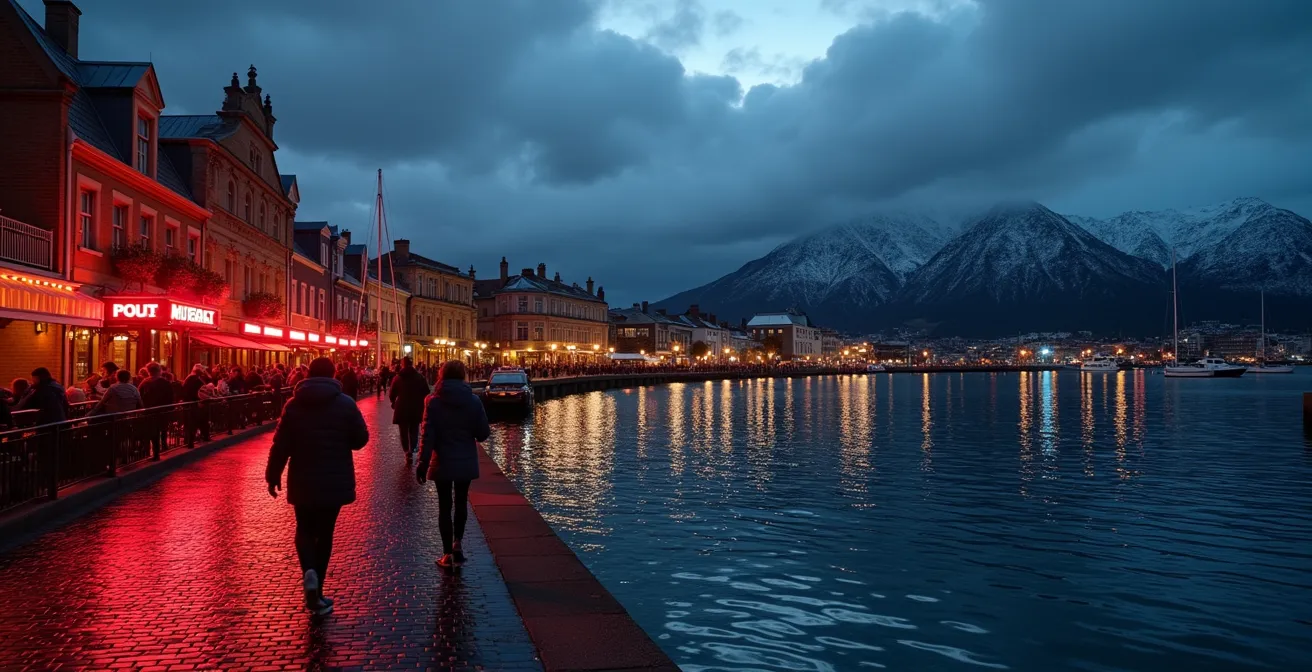
Hobart’s winter isn’t an obstacle to your cultural journey; it’s the main stage, where the cold and dark are essential ingredients for an unforgettable Dark Mofo experience.
- Strategic preparation is non-negotiable, from booking months in advance to mastering the art of layering against the specific Hobart wind chill.
- The best experiences, from the Winter Feast to aurora hunting, reward those who plan ahead and embrace the unique rhythm of the festival.
Recommendation: Treat your trip not as a simple visit, but as a curated pilgrimage. By respecting the elements and the festival’s demands, you unlock a deeper, more profound connection to the art and the atmosphere.
There’s a myth that travel is best done in the sun. That a good trip requires mild weather and long, bright days. Hobart in June shatters this myth with a blast of Antarctic air. For the cultural tourist, the annual pilgrimage to Dark Mofo isn’t about escaping the cold; it’s about diving headfirst into it. Many guides will tell you to “pack warm” or “book ahead,” but they miss the fundamental truth of a Tasmanian winter. This isn’t just cold; it’s an elemental force that shapes the entire experience, and preparing for it is part of the ritual.
Forget the generic advice. The key to unlocking the magic of Dark Mofo isn’t just about surviving the weather, but about understanding its character. It’s about knowing why a standard coat won’t suffice against the katabatic winds whipping down from kunanyi / Mount Wellington, and how that chill makes the fire pits of the Winter Feast feel like pagan beacons of comfort. This isn’t a trip you can improvise. It demands foresight and a strategy, transforming the planning process from a chore into the first act of the performance itself.
This guide is built from a curator’s perspective. We won’t just list what to see; we’ll reveal how to experience it. We’ll explore the necessity of specific gear, the tactics for feasting without the queues, the timeline for securing your place amidst the surge, and the joy of finding both sanctuary in museums and spectacle in the clear, frigid night sky. This is your strategy for embracing the glorious, challenging, and deeply rewarding darkness of a Hobart winter.
To help you navigate this unique winter festival, we’ve structured this guide to cover every aspect of your preparation, from practical clothing choices to the philosophical heart of the city’s creative scene.
Summary: Visiting Hobart in Winter: How to Enjoy the Cold Dark Mofo Season?
- The puffer jacket necessity: why a standard coat isn’t enough for Hobart winds?
- The Winter Feast: how to get a table without queuing for an hour?
- The ‘Dark Mofo’ surge: why you must book 6 months ahead for June dates?
- Museum hopping: escaping the rain in MONA and the TMAG
- Black ice on Mount Wellington: safe driving tips for rental cars
- Layering clothes for Melbourne weather: the strategy used by locals
- Summer heat vs Winter clear skies: when is the view from the window best?
- Melbourne vs Sydney: Which City Fits Your Creative Style Better?
The puffer jacket necessity: why a standard coat isn’t enough for Hobart winds?
The first thing to understand about Hobart’s cold is that it isn’t passive. It’s an active, biting force, largely driven by the infamous katabatic winds that cascade down from kunanyi / Mount Wellington. These dense, cold airflows are the reason the temperature at the waterfront can feel dramatically different from what a weather app might suggest. It’s a damp, penetrating chill that finds its way through standard wool coats and leaves you shivering. A mere fashion coat is a surrender; the ‘Tassie Tuxedo’—a high-quality puffer jacket—is your armour.
The mountain’s influence is no small matter. There can be a staggering 6-7 degrees Celsius drop between sea level and the peak, and that cold air has to go somewhere. It flows down the valleys and across the city, creating a persistent wind chill that makes outdoor events like the Winter Feast a test of endurance without the right gear. Your jacket must be both windproof and waterproof, not just warm. This outer shell is your primary defence against the elements, protecting the insulating layers beneath.
Think of your clothing not as a single outfit but as a technical system. A merino wool base layer is essential for wicking moisture away without getting cold (cotton is your enemy here). A fleece or wool mid-layer provides insulation. Finally, the puffer jacket seals you off from the wind and rain. This combination allows you to stay comfortable for hours outdoors, fully immersed in the strange, fiery beauty of a Dark Mofo night, rather than retreating to the nearest heater.
The Winter Feast: how to get a table without queuing for an hour?
The Winter Feast is the roaring, beating heart of Dark Mofo. It’s a vast, gothic banquet hall filled with the smoke of open fires, the scent of mulled wine, and the best of Tasmania’s produce. It’s also incredibly popular. With the festival drawing massive crowds—official figures show 427,000 total entries to festival events in 2023—simply showing up at 7 p.m. is a recipe for a long, cold wait. The secret to enjoying the Feast is strategy, not spontaneity.
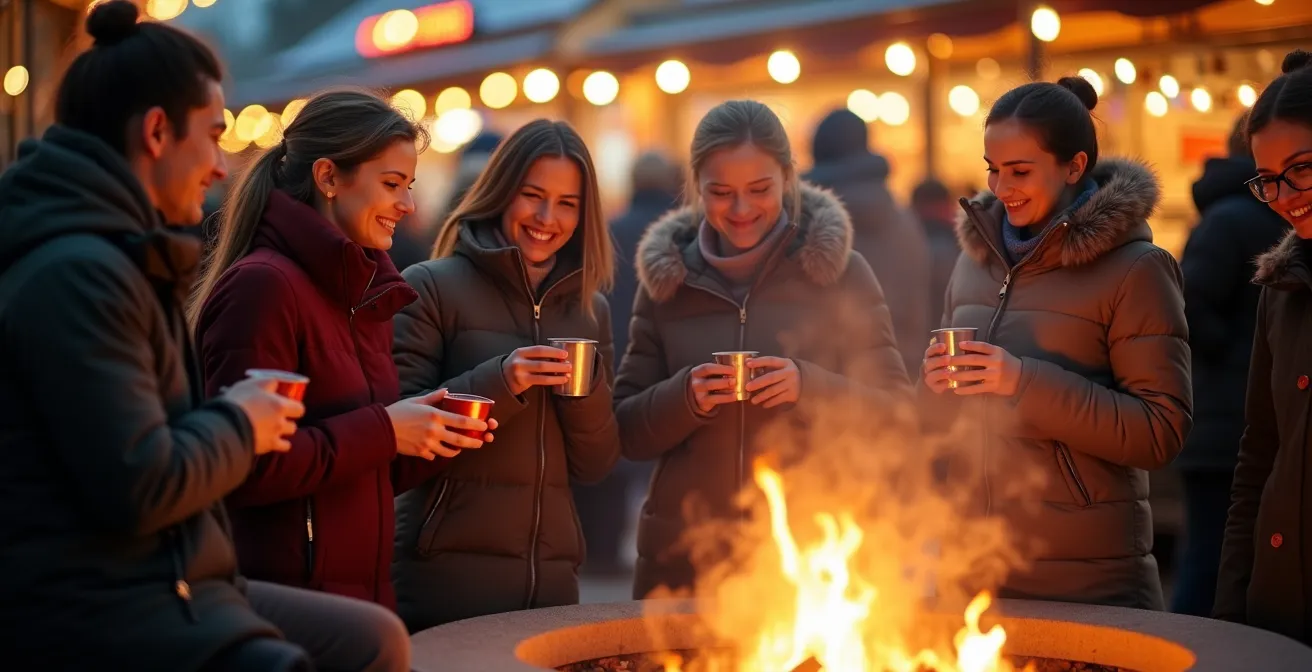
The veteran’s move is to arrive early. Doors typically open around 4:30 p.m., and being there at the start means you can wander through the stalls, secure a coveted spot near a fire pit, and enjoy your meal before the peak crowds descend. By 6 p.m., the atmosphere is buzzing but still navigable. By 7:30 p.m., it’s a bustling sea of people. Another pro-tip is to aim for a Thursday night. The admission is often cheaper, and the crowds are noticeably smaller than on the weekend, offering a more relaxed and intimate experience of the grand hall.
Once inside, don’t just grab the first thing you see. Do a lap. Survey the offerings from the dozens of vendors. This is a celebration of Tasmanian food, from flame-grilled meats and fresh oysters to strange and wonderful desserts. The long, shared tables are part of the communal experience, so don’t be shy about finding a space and striking up a conversation. The Feast is designed to be a ritual of shared warmth and indulgence against the dark, and approaching it with a plan ensures you experience its full glory.
The ‘Dark Mofo’ surge: why you must book 6 months ahead for June dates?
Dark Mofo is no longer a local secret. It has become a major national event, a cultural pilgrimage that sees the city’s population swell dramatically. The ‘Dark Mofo surge’ is real, and it has a profound impact on flights and accommodation. In 2023, the festival attracted over 45,000 interstate visitors and sold over 100,000 tickets. This influx means that if you’re thinking about booking in April for a June trip, you’re already too late for the best options and prices.
Planning a Dark Mofo trip requires a military-like precision that begins half a year out. Accommodation, especially unique or well-located properties, gets snapped up almost immediately after the festival dates are announced. Flights follow a similar pattern, with prices surging as the dates draw nearer. Waiting for the program release in April to book travel is a critical mistake; by then, you should be focused on securing tickets for specific, high-demand events, not scrambling for a place to stay.
The most successful trips are planned with a clear timeline, treating the booking process as an integral part of the festival experience. This forethought doesn’t just save you money and stress; it guarantees you have the energy to fully immerse yourself in the art, music, and food without worrying about logistics. It is the foundational ritual that makes everything else possible.
Your Action Plan: Booking Your Dark Mofo Pilgrimage
- 6+ Months Ahead: Book your accommodation. This is your number one priority. Unique properties and city-center hotels will be gone first.
- 4-5 Months Ahead: Secure your flights. Prices will only go up from here, so lock in your travel as soon as you have your dates confirmed.
- April (2 Months Ahead): The program is released. Be ready to book tickets for key performances, concerts, and ticketed events immediately as they sell out fast.
- 1 Month Ahead: Reserve tables at any specific restaurants you want to visit outside of the Feast. Popular venues will be fully booked.
- Last Minute: If you missed out on tickets, keep an eye on official resale platforms like Tixel. For accommodation, look at suburbs just outside the CBD like North Hobart.
Museum hopping: escaping the rain in MONA and the TMAG
Hobart’s winter often brings rain, but this is less an inconvenience and more an invitation to explore the city’s incredible indoor cultural sanctuaries. The most famous of these, of course, is the Museum of Old and New Art (MONA), the subversive underground institution that is, in many ways, the spiritual home of Dark Mofo. As festival co-founder Leigh Carmichael has noted, the festival was born from a desire to bring people to the museum during the quiet winter months.
Dark Mofo was conceived as a ‘marketing exercise’ to build MONA visitation during winter months
– Leigh Carmichael, Wikipedia – Dark Mofo history
A visit to MONA during Dark Mofo is essential. The ferry ride across the Derwent River is a moody, atmospheric journey in itself, and descending into the museum’s labyrinthine depths feels like a perfect echo of the festival’s themes. But MONA is not the only haven. The Tasmanian Museum and Art Gallery (TMAG) in the city centre offers a fascinating and more traditional counterpoint, with rich collections covering natural history, colonial art, and Tasmania’s unique connection to Antarctica. It’s a place to ground yourself in the island’s broader story.
Beyond the main institutions, the city offers more intimate escapes. You can explore Tasmania’s crucial role as an Antarctic gateway city at the Maritime Museum of Tasmania, with its incredible exhibits on seafaring and Southern Ocean exploration. Or, for a different kind of cultural immersion, seek warmth at the Lark Distillery Cellar Door or Forty Spotted Gin’s bar for a whisky blending experience or a gin masterclass. These spaces offer not just shelter from the rain, but a chance to engage with the craft and character of the island in a warm, intimate setting.
Black ice on Mount Wellington: safe driving tips for rental cars
The pinnacle of Hobart’s natural landscape, kunanyi / Mount Wellington, offers breathtaking views over the city and southern Tasmania. In winter, its peak is often dusted with snow, creating a scene of stark, alpine beauty. However, reaching that view requires caution. The road to the summit is winding and exposed, and the combination of freezing temperatures and moisture creates a significant risk of black ice, a transparent, treacherous layer of ice that is notoriously difficult to see.
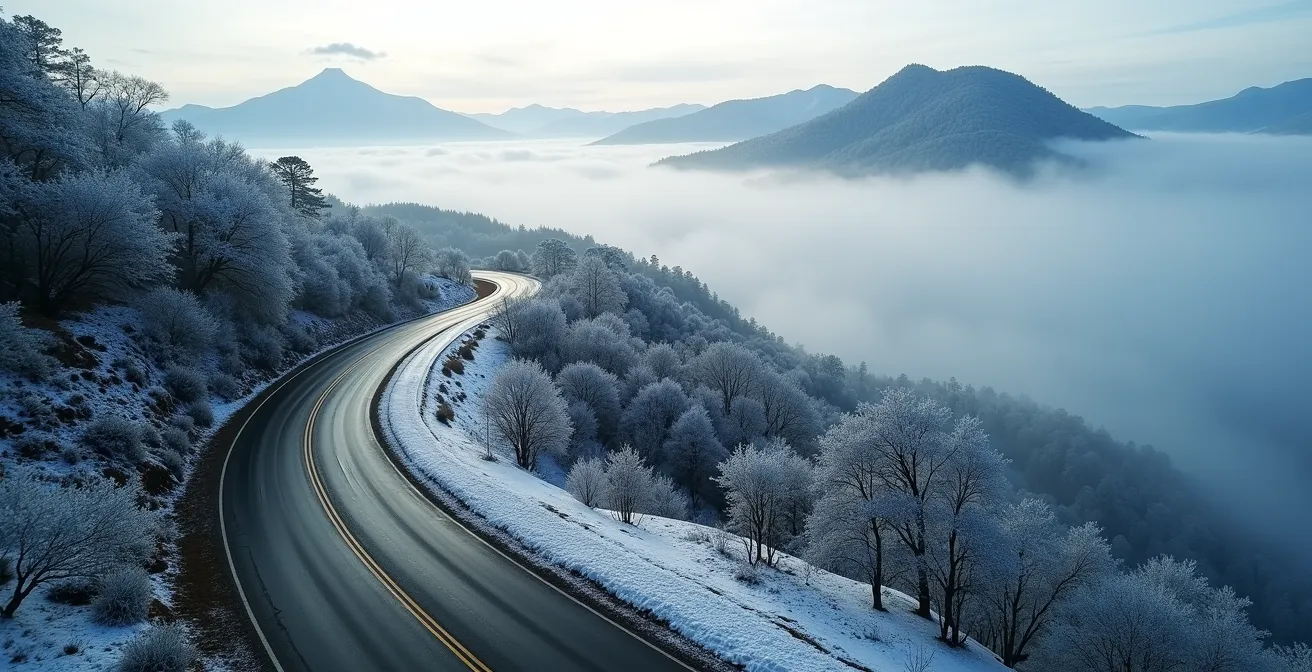
The danger is most acute in the early mornings, when temperatures are at their lowest. As Hobart’s weather patterns show, cold air pools in the valleys and on sheltered sections of the road, leading to frequent frost and ice. If you’re in a rental car, it’s unlikely to be equipped with winter tires, making the drive even more hazardous. The key to a safe ascent is not bravery, but prudence and preparation. Sudden braking or acceleration on an icy patch can easily lead to a loss of control.
Before you even consider driving up, you must follow a safety protocol. The safest and most relaxing way to experience the mountain in winter is often to leave the driving to someone else. The Mt Wellington Explorer Bus provides not only a safe journey but also running commentary on the mountain’s history and ecology. If you do choose to drive, remember these key rules:
- Check Conditions First: Always check the Hobart City Council’s website for the current road status and webcam feeds before you leave.
- Avoid Early Mornings: Postpone your drive until later in the day when the sun has had a chance to melt the most dangerous patches of ice.
- Drive Slowly and Steadily: Maintain a consistent, slow speed, especially around corners and in shaded areas where ice lingers.
- Never Panic on Ice: If you hit a patch of black ice, do not slam on the brakes or jerk the steering wheel. Keep the wheel straight and ease off the accelerator until you regain traction.
Layering clothes for Melbourne weather: the strategy used by locals
Visitors from mainland Australia, particularly Melbourne, often assume they understand cold. Melbourne is famous for its “four seasons in one day,” which breeds a flexible approach to layering. However, applying a Melbourne layering strategy to a Hobart winter is a common and chilly mistake. The challenge is fundamentally different. Melbourne’s weather is variable; Hobart’s winter cold is persistent, driven by that relentless wind chill.
The “Tassie Tuxedo” philosophy that locals embrace highlights a key difference: Hobart’s winter culture happens outdoors. While a Melburnian might transition quickly between a heated tram, a warm cafe, and a cozy bar, a Dark Mofo attendee might spend hours at the Winter Feast, watching an outdoor performance, or waiting for the southern lights. This requires gear designed for prolonged exposure, not just quick dashes through the cold. Cotton base layers, which might be acceptable in Melbourne, become a liability in Hobart as they absorb sweat and then turn cold against your skin. Merino wool is the only real option.
A direct comparison reveals why the gear needs to be a step up. The outer layer that works for a Melbourne winter is often just a light jacket, whereas in Hobart, it absolutely must be windproof and waterproof to be effective. Accessories are not optional; they are essential parts of the system.
| Aspect | Melbourne Winter | Hobart Winter |
|---|---|---|
| Average Temperature | 14°C high | 13°C high (southernmost) |
| Key Challenge | Variable weather changes | Persistent wind chill |
| Base Layer | Cotton acceptable | Merino wool essential |
| Outer Layer | Light jacket sufficient | Windproof/waterproof required |
| Accessories | Optional | Gloves, beanie essential |
Summer heat vs Winter clear skies: when is the view from the window best?
While summer offers long days, Hobart’s winter provides a different kind of visual reward: clarity. The cold, dense air of winter significantly reduces atmospheric haze, resulting in views that are incredibly crisp and far-reaching. From the top of kunanyi / Mount Wellington or even just across the harbour from Rosny Point, the landscape takes on a sharp, high-definition quality that summer’s warmth often obscures. The golden hour light of sunrise and sunset also lingers longer and has a more dramatic, painterly quality in winter.

But the ultimate prize of the winter night is the Aurora Australis. Tasmania’s southern latitude makes it one of the best places in the world to witness the southern lights, and winter offers the perfect conditions. The long, dark nights provide an extended canvas for the celestial display. The key is to find a clear, moonless night and escape the light pollution of the city. Spots like Mount Wellington or Mount Nelson are classic vantage points, offering unobstructed views to the south.
Chasing the aurora is a quintessential Dark Mofo activity, a perfect fusion of nature’s spectacle and the festival’s embrace of the dark. The view from your window—or, better yet, from a windswept lookout—is arguably at its most magical during these cold, clear nights. It is a profound reminder that darkness is not an absence of light, but a stage for a different kind of brilliance. According to Tourism Australia, winter provides the best Aurora viewing opportunities, making the cold journey south even more worthwhile.
Key takeaways
- Hobart’s winter requires specific, high-quality gear; a windproof puffer jacket and merino base layers are not optional, but essential.
- Strategic timing is everything for Dark Mofo. Book travel and accommodation 6+ months in advance and arrive at the Winter Feast before 5 p.m. to avoid the biggest crowds.
- Embrace the indoor sanctuaries like MONA and TMAG as curated escapes from the rain, and seize the clear, cold nights as a rare opportunity to hunt for the Aurora Australis.
Melbourne vs Sydney: Which City Fits Your Creative Style Better?
When Australian cultural tourists consider a creative getaway, the debate often defaults to Melbourne versus Sydney. Sydney offers polished spectacle—the Opera House, the harbour, and a glamorous high-culture scene. Melbourne counters with its gritty laneway art, underground music venues, and a celebrated alternative vibe. But for the truly adventurous creative spirit, especially in winter, this debate misses the most compelling option on the map: Hobart.
Hobart, supercharged by Dark Mofo, offers a third path. It isn’t polished or gritty; it is elemental and darkly intellectual. Its creative scene is not a backdrop for city life but a ritualistic confrontation with nature, history, and the self. While Sydney’s art is often about beauty and Melbourne’s is about expression, Hobart’s, particularly through MONA and Dark Mofo, is about provocation. It’s a scene that is comfortable with the uncomfortable, finding power in pagan themes, modern anxieties, and radical, uncompromising programming.
The choice between these creative capitals ultimately depends on what you seek. If you want spectacle, go to Sydney. If you want to immerse yourself in a vibrant, established alternative culture, go to Melbourne. But if you want your art to challenge you, to be entwined with the very cold and darkness of the season, then Hobart is the only answer. It offers a creative experience that doesn’t just decorate the city but defines it.
| City | Creative Character | Art Scene Focus | Cultural Vibe |
|---|---|---|---|
| Sydney | Polished & Spectacular | Harbor-side galleries, Opera House | Beach glamour meets high culture |
| Melbourne | Gritty & Laneway-focused | Street art, underground venues | Cafe culture, alternative scene |
| Hobart | Elemental & Darkly Intellectual | MONA’s subversive art, Dark Mofo | Pagan rituals meet modern provocation |
Embracing Hobart in winter is an act of deliberate participation. It requires preparation, respect for the elements, and a willingness to find beauty in the shadows. By arming yourself with the right gear and the right strategy, you transform a potentially challenging trip into a deeply rewarding cultural pilgrimage. Start planning your journey into the dark.